Bibimbap with Five Vegetable Banchan (Mixed Rice Bowl)
- Prep
25 minutes - Cook
35 minutes - Serves
2 servings - Difficulty
medium
Ingredients
- 3 cups cooked short-grain white rice (warm or room temperature)
- 200g (7 oz) fresh spinach
- 200g (7 oz) soybean sprouts (kongnamul) or mung bean sprouts
- 1 medium carrot, julienned (about 1 cup)
- 1 medium zucchini, julienned (about 1 cup)
- 4-5 dried shiitake mushrooms, rehydrated and sliced (or 150g fresh)
- 3 cloves garlic, minced (divided)
- 3 tablespoons sesame oil (divided)
- 2 tablespoons soy sauce (divided)
- 2 teaspoons toasted sesame seeds
- Salt to taste
- 2 eggs
- 1 tablespoon neutral cooking oil
- FOR GOCHUJANG SAUCE:
- 2 tablespoons gochujang (Korean red pepper paste)
- 1 tablespoon sesame oil
- 1 tablespoon water or rice vinegar
- 1 teaspoon sugar
- 1 teaspoon toasted sesame seeds
Bibimbap is deceptively simple—rice, vegetables, egg, sauce—but what makes it truly satisfying is the contrast of textures and the way each vegetable banchan (나물 반찬) holds its own flavor before you mix everything together. The secret isn’t fancy technique; it’s preparing multiple namul efficiently in sequence so you’re not dirtying five pans, and nailing the gochujang sauce ratio so it coats every grain without overpowering the vegetables. Once you’ve done it a couple of times, bibimbap becomes one of the most flexible, use-what-you-have meals in your repertoire.
Prep Your Vegetables in Smart Order
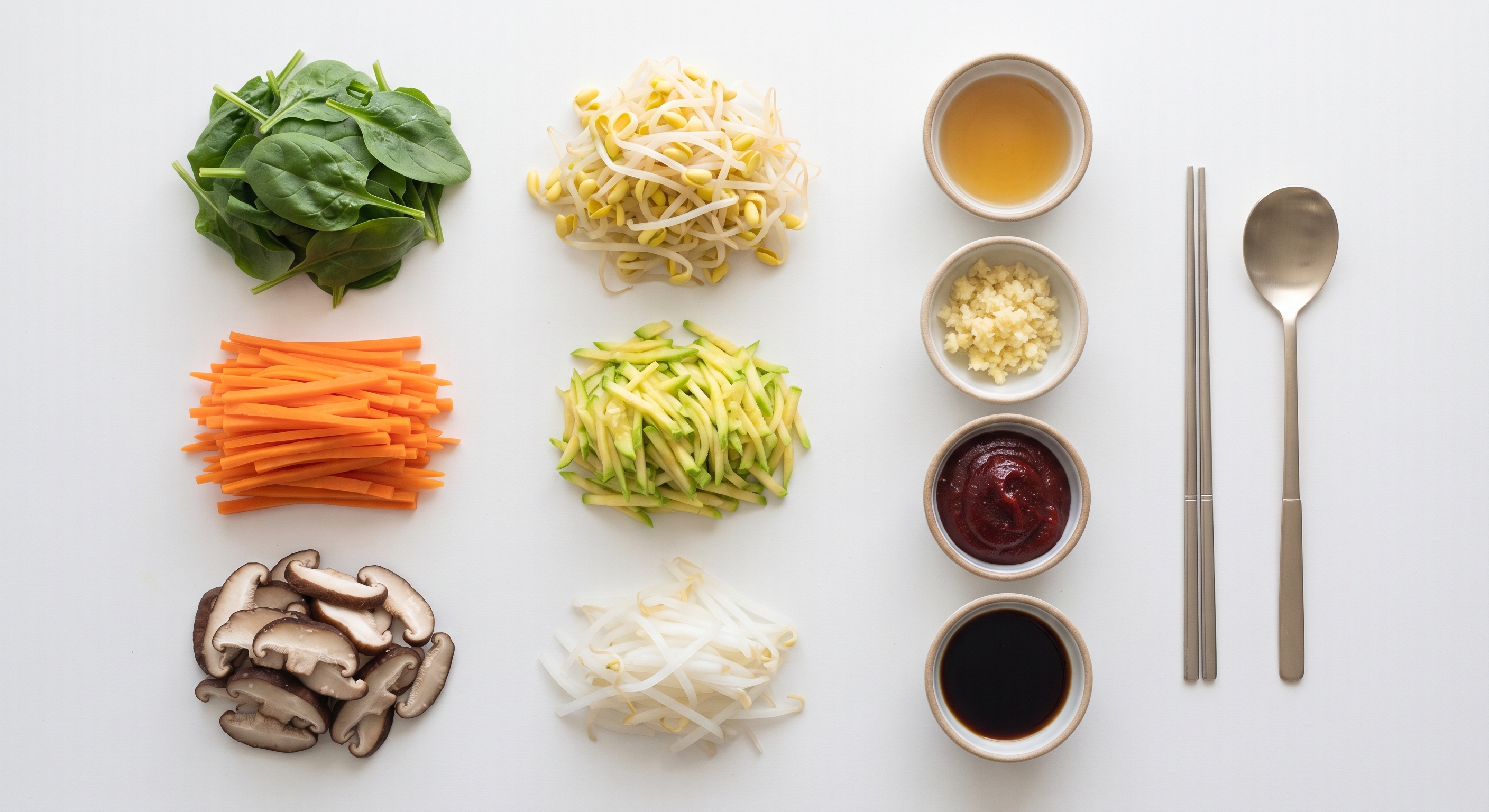
The key to making bibimbap without losing your mind is to prep and cook your namul in a sequence that uses the same water and pan. Start with the mildest vegetables and move toward the strongest flavors so you don’t need to wash equipment between each one.
Blanch the spinach first. Bring a medium pot of water to a boil. Add the spinach and blanch for 30-40 seconds until just wilted—it cooks fast. Drain, rinse under cold water, and squeeze out as much liquid as you can (really squeeze it; soggy spinach ruins the texture). Chop roughly, then toss with a pinch of salt, 1 teaspoon sesame oil, and 1/3 of the minced garlic. Set aside.
Use the same pot of boiling water for the bean sprouts. Add them and boil for 3-4 minutes until just tender but still crunchy. Drain, rinse, squeeze gently, and season with a pinch of salt, 1 teaspoon sesame oil, and another 1/3 of the garlic. Bean sprouts should have a slight snap, not be mushy.
Sauté the Remaining Vegetables
Now heat a large skillet over medium heat with a drizzle of neutral oil. Start with the carrots—sauté for 2-3 minutes until softened but still bright orange. Season lightly with salt and a few drops of sesame oil. Transfer to a plate.
In the same pan, add the zucchini. Sauté for 2 minutes until tender and any moisture has cooked off. Zucchini releases water, so don’t crowd the pan. Season with salt and sesame oil, transfer out.
Finally, add the sliced shiitake mushrooms (squeeze out excess soaking liquid if using dried). Sauté for 3-4 minutes until browned and fragrant. Add a splash of soy sauce (about 1 teaspoon) and the remaining garlic in the last minute. The mushrooms should smell earthy and slightly caramelized.
Make the Gochujang Sauce
The classic ratio is 2:1:1—two parts gochujang to one part sesame oil to one part liquid (water, rice vinegar, or even a little apple juice for sweetness). In a small bowl, whisk together the gochujang, sesame oil, water or vinegar, sugar, and sesame seeds until smooth. Taste it—if it’s too thick, add a few more drops of water; if it’s too spicy-sharp, add a pinch more sugar. This sauce should be glossy and pourable, not paste-thick.
💡 Tip: Make a double batch of this sauce and keep it in the fridge for up to two weeks. It’s fantastic on grain bowls, roasted vegetables, or as a dipping sauce for dumplings.
Fry the Eggs and Assemble
Heat a small skillet over medium heat with the cooking oil. Crack the eggs and fry them sunny-side up until the whites are set but the yolks are still runny, about 2-3 minutes. You want that yolk to break and mix into the rice when you stir everything together.
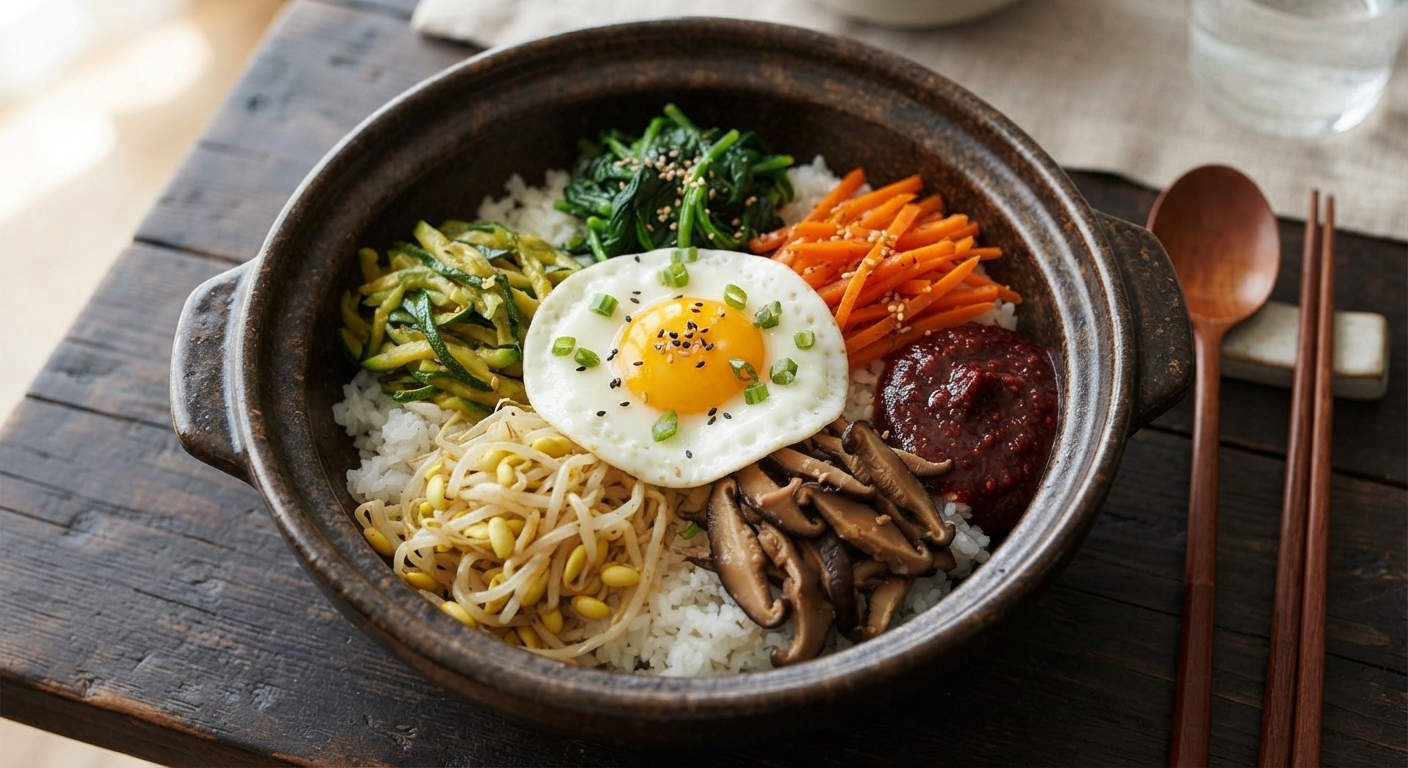
Divide the warm rice between two bowls. Arrange each of the five vegetable banchan in separate piles on top of the rice—spinach, bean sprouts, carrots, zucchini, and mushrooms. It should look like a color wheel. Place a fried egg in the center of each bowl and add a generous spoonful of gochujang sauce on the side.
Sprinkle everything with sesame seeds.
Serving and Substitutions
To eat bibimbap properly, mix everything together vigorously before taking your first bite—the Korean name literally means “mixed rice.” The runny yolk, sesame oil from the namul, and gochujang should coat every grain.
If you can’t find soybean sprouts, mung bean sprouts work (they’re milder and thinner). No shiitake? Use any mushroom you like—oyster, cremini, even canned mushrooms in a pinch (just drain and sauté until dry). Fernbrake (gosari) and bellflower root (doraji) are traditional additions if you find them at a Korean market, but the five-vegetable version here is absolutely classic.
For a dolsot bibimbap experience (served in a hot stone bowl with crispy rice at the bottom), heat an oven-safe bowl in a 450°F oven for 10 minutes, brush with sesame oil, add rice, and let it sizzle for 3-4 minutes before topping. The crispy layer—nurungji—is the best part.