Bossam (Korean Boiled Pork Wraps with Radish Salad)
- Prep
20 minutes - Cook
90 minutes - Serves
4-6 servings - Difficulty
medium
Ingredients
- 2 lbs pork belly, skin-on if possible
- 1 medium onion, quartered
- 6-8 garlic cloves, smashed
- 1 thumb-sized piece fresh ginger, sliced
- 3-4 green onions, cut into thirds
- 1 tbsp doenjang (Korean soybean paste)
- 1 tsp whole black peppercorns
- 2-3 dried kelp pieces (dashima), about 4x4 inches each, optional
- 2 tbsp rice wine or sake
- For musaengchae (radish salad):
- 1 lb Korean radish (mu) or daikon, julienned
- 1½ tsp salt
- 2 tbsp sugar
- 2 tbsp rice vinegar
- 1 tsp minced garlic
- 1 tsp gochugaru (Korean red pepper flakes)
- 1 tsp sesame oil
- 1 tsp toasted sesame seeds
- For serving:
- 1 head Napa cabbage or red leaf lettuce, leaves separated
- Ssamjang (Korean dipping sauce) or doenjang
- Salted shrimp (saeujeot), optional
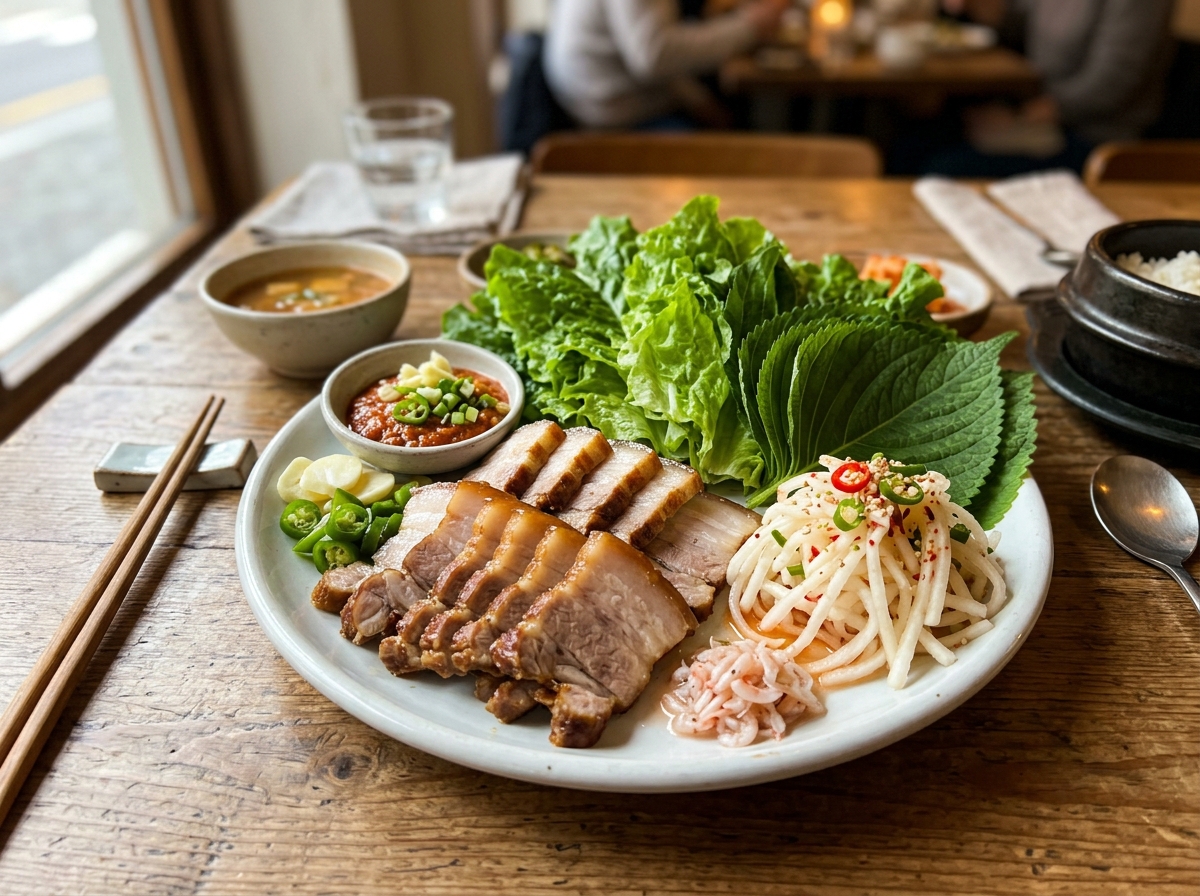
Bossam is one of those dishes that looks impressive but is actually quite forgiving—tender, melt-in-your-mouth pork belly boiled until silky, then wrapped in crisp lettuce with tangy radish salad and a dab of salty-sweet ssamjang. The key is knowing how to boil the pork so it comes out clean-tasting and odor-free, which is easier than you think once you understand the technique.
Prepare the Pork and Boiling Liquid
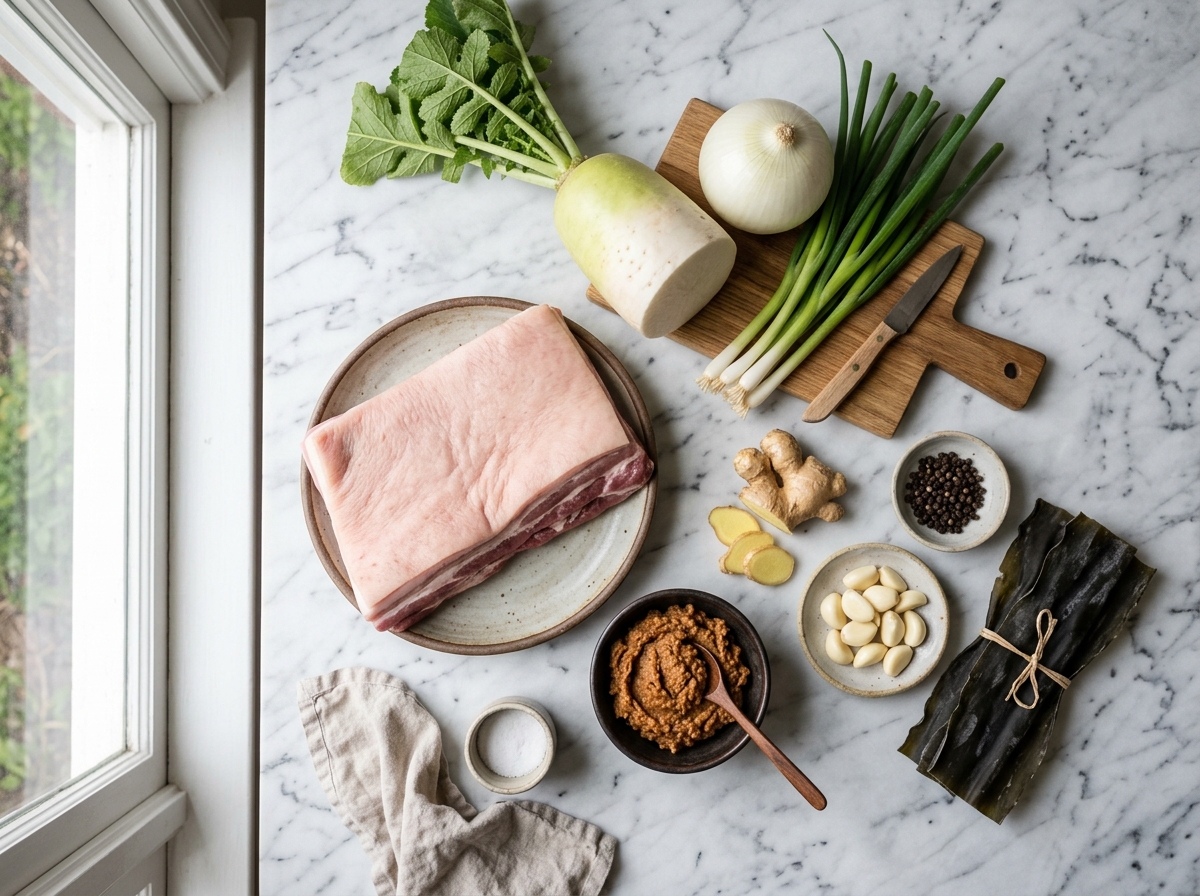
The secret to removing any unpleasant odor (잡내) from pork belly is boiling it twice: a quick first boil to release impurities, then a long, aromatic second boil to tenderize and flavor the meat. Start by placing the pork belly in a large pot and covering it completely with cold water. Bring to a rolling boil over high heat and cook for 5 minutes—you’ll see gray foam and scum rise to the surface. This is exactly what you want to get rid of.
Drain the pork and rinse it thoroughly under running water, rubbing away any remaining scum. Rinse out the pot as well—you want a completely fresh start. Return the pork to the clean pot and add the onion, garlic, ginger, green onions, doenjang, peppercorns, kelp if using, and rice wine. Cover with fresh cold water (about 8-10 cups, enough to submerge the pork by an inch). The doenjang adds subtle savory depth and also helps neutralize odors; don’t skip it.
Simmer Until Tender
Bring the pot back to a boil over high-medium heat, then reduce to a gentle simmer and cover. Cook for 60-75 minutes, checking occasionally to make sure the pork stays submerged—add a bit more water if needed. You’re looking for the meat to be completely tender when pierced with chopsticks or a fork; there should be almost no resistance. The exact time depends on the thickness of your pork belly, so start checking around the 60-minute mark.
💡 Tip: Don’t rush the simmer. Boiling too hard will make the meat tough and stringy instead of silky. A lazy bubble is perfect.
Once the pork is tender, turn off the heat and let it rest in the cooking liquid for 15-20 minutes. This resting period allows the meat to reabsorb some moisture and makes slicing much easier. If you try to slice it straight out of boiling water, it tends to fall apart.
Make the Musaengchae (Radish Salad)
While the pork rests, prepare the radish salad—it’s the bright, crunchy counterpoint that makes bossam so addictive. Julienne the radish into thin matchsticks (a mandoline makes quick work of this). Place the radish in a bowl, sprinkle with the salt, and massage gently for 1-2 minutes until it starts to release water. Let it sit for 10 minutes, then squeeze out as much liquid as possible—really wring it out with your hands.
In a clean bowl, combine the drained radish with the sugar, rice vinegar, minced garlic, gochugaru, sesame oil, and sesame seeds. Toss well. The salad should taste tangy, lightly sweet, and just a touch spicy. You can make this up to a few hours ahead; it actually gets better as it sits and the flavors meld. If you can’t find Korean radish, daikon works well—just know that it’s a bit more watery, so be extra diligent about squeezing out the liquid.
Slice and Serve
Remove the pork from the cooking liquid and let any excess liquid drip off. Place it on a cutting board and slice against the grain into pieces about ¼ inch thick. If the pork is very soft, chilling it in the fridge for 10-15 minutes can make slicing neater, but it’s not strictly necessary.
Arrange the sliced pork on a platter. Serve alongside the fresh lettuce leaves, the musaengchae, and small dishes of ssamjang and salted shrimp if you have it. To eat, take a lettuce leaf, add a slice or two of pork, a pinch of radish salad, a dab of sauce, and wrap it all up in one bite. The contrast of rich pork, crisp lettuce, and zingy radish is what makes bossam so satisfying.
Serving and Substitutions
Bossam is a natural party dish—it’s interactive, feeds a crowd, and tastes even better when shared. Leftover pork keeps well in the fridge for 3-4 days and reheats gently in the microwave or can be eaten cold in wraps.
Can’t find doenjang? A tablespoon of white or yellow miso works in a pinch for the boiling liquid. No Korean radish? Regular daikon is fine; just expect it to be slightly less crisp and sweet. If you absolutely can’t find either, a very crisp, mild white turnip can work, though the flavor will be different. Pork shoulder instead of belly? It works and is leaner, but you’ll lose some of that luscious richness that makes bossam special. Stick with belly if you can.