Bulgogi (Korean Marinated Beef BBQ)
- Prep
15 minutes - Cook
10 minutes - Serves
4 servings - Difficulty
easy
Ingredients
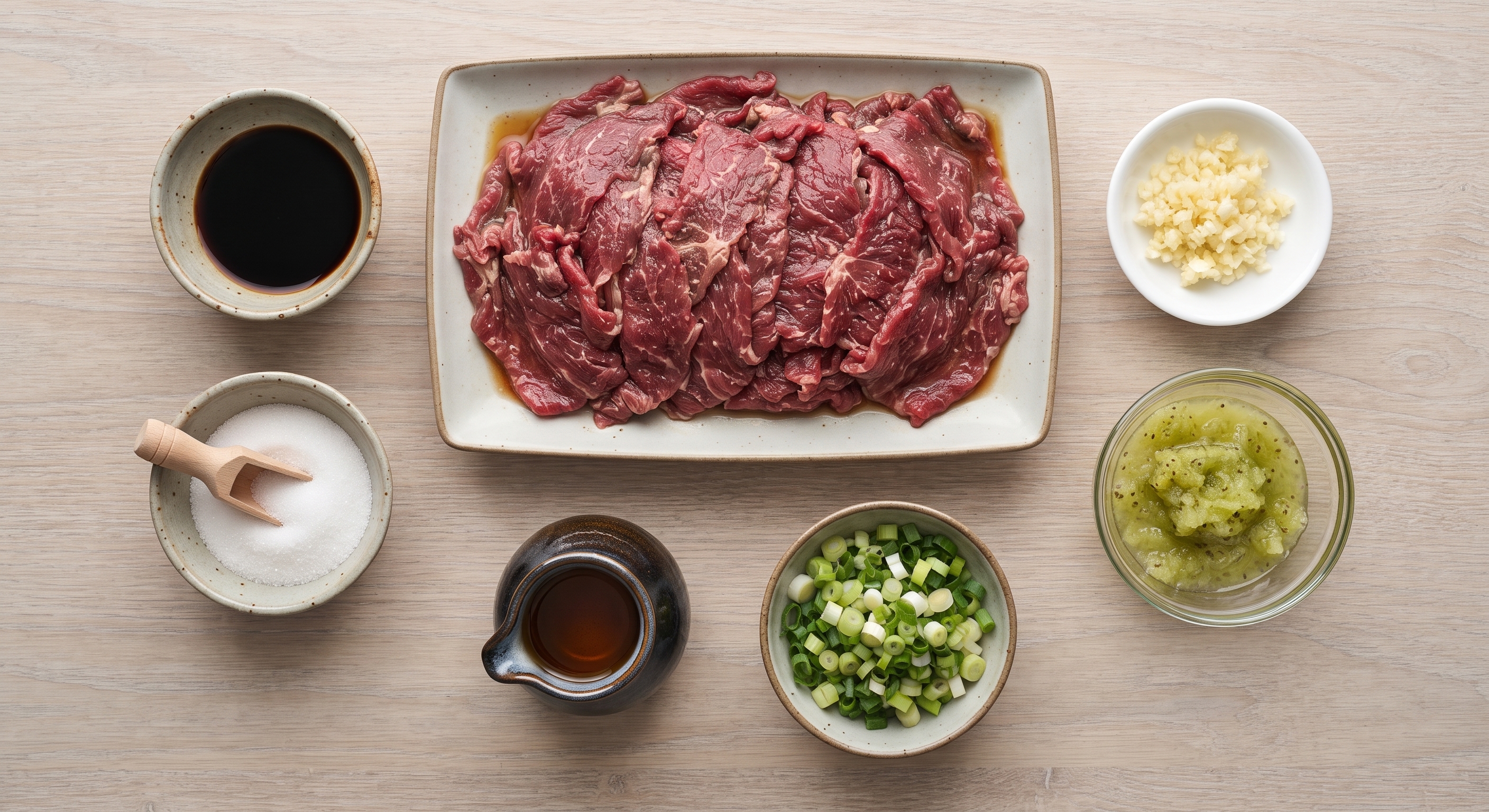
- 600 g (1.3 lb) beef ribeye, sirloin, or tenderloin, thinly sliced
- 1/2 Asian pear or 1/4 kiwi, peeled and grated (about 3-4 tablespoons)
- 1/4 cup soy sauce
- 2 tablespoons sugar (or brown sugar)
- 2 tablespoons sesame oil
- 3 cloves garlic, minced
- 1/4 medium onion, grated or finely minced (about 3 tablespoons)
- 2 green onions, sliced (white and green parts separated)
- 1 tablespoon rice wine or mirin (optional)
- 1/2 teaspoon black pepper
- 1 tablespoon toasted sesame seeds
- 1 tablespoon neutral oil (for cooking)
Bulgogi is Korea’s most famous beef dish for good reason: thin slices of beef soaked in a sweet-savory marinade, then quickly seared until caramelized at the edges. The key is a balanced marinade and properly tender meat, and one traditional trick makes all the difference—grated Asian pear or kiwi, which naturally tenderizes the beef and adds a subtle sweetness you won’t get from sugar alone.
Preparing the Beef
The best bulgogi starts with thinly sliced beef, about 2-3 mm thick. Ribeye is my top choice for flavor and marbling, but sirloin or tenderloin work beautifully too. If you’re slicing at home, freeze the beef for 30-40 minutes first—it firms up just enough to make clean, thin slices much easier. Many Korean or Asian grocery stores also sell pre-sliced “bulgogi beef,” which saves you the knife work.
Pat the slices dry with paper towels. Excess moisture dilutes the marinade and makes it harder to get that nice sear later.
Making the Marinade
In a large mixing bowl, combine the soy sauce, sugar, sesame oil, minced garlic, grated onion, rice wine (if using), and black pepper. Stir until the sugar dissolves completely.
Now add the grated Asian pear or kiwi. This is the secret weapon. Both fruits contain enzymes (pear has less, kiwi has more) that break down tough muscle fibers, making even less-expensive cuts melt-in-your-mouth tender. Asian pear is traditional and adds gentle sweetness; kiwi is more aggressive, so use sparingly—1/4 kiwi is plenty or the meat can turn mushy if marinated too long.
💡 Tip: If you can’t find Asian pear or kiwi, substitute with 2 tablespoons of finely grated regular pear or apple, or 1 tablespoon of pureed pineapple. In a pinch, a teaspoon of grated ginger adds flavor but won’t tenderize the same way.
Add the white parts of the green onions (save the green tops for garnish). Mix everything together, then add the beef slices. Use your hands to massage the marinade into every piece, ensuring even coverage.
Marinating Time
Marinate for at least 30 minutes at room temperature, or 2-4 hours in the refrigerator for deeper flavor. I usually aim for 2 hours—it’s the sweet spot where the meat absorbs the marinade fully without becoming overly soft. If you’re using kiwi, don’t marinate longer than 2 hours or the texture can become mealy. For pear-based marinades, up to 4 hours is fine, even overnight if you’re prepping ahead.
Cooking the Bulgogi
Heat a large skillet or grill pan over medium-high heat and add the neutral oil. You want the pan hot enough to sear, not steam the beef.
Working in batches to avoid crowding (crowding drops the pan temperature and makes the beef boil instead of caramelize), spread the beef slices in a single layer. Cook for 1-2 minutes without moving them, letting the sugars in the marinade caramelize and create golden-brown edges. Flip and cook another 1-2 minutes until just cooked through. Bulgogi cooks fast because the slices are so thin—don’t overdo it or the meat turns tough.
Transfer the cooked batch to a plate and repeat with remaining beef, adding a touch more oil if the pan looks dry.
Finishing and Serving
Once all the beef is cooked, return it to the pan (or a serving platter) and toss with the reserved green onion tops and sesame seeds. The residual heat will wilt the green onions slightly and release their aroma.
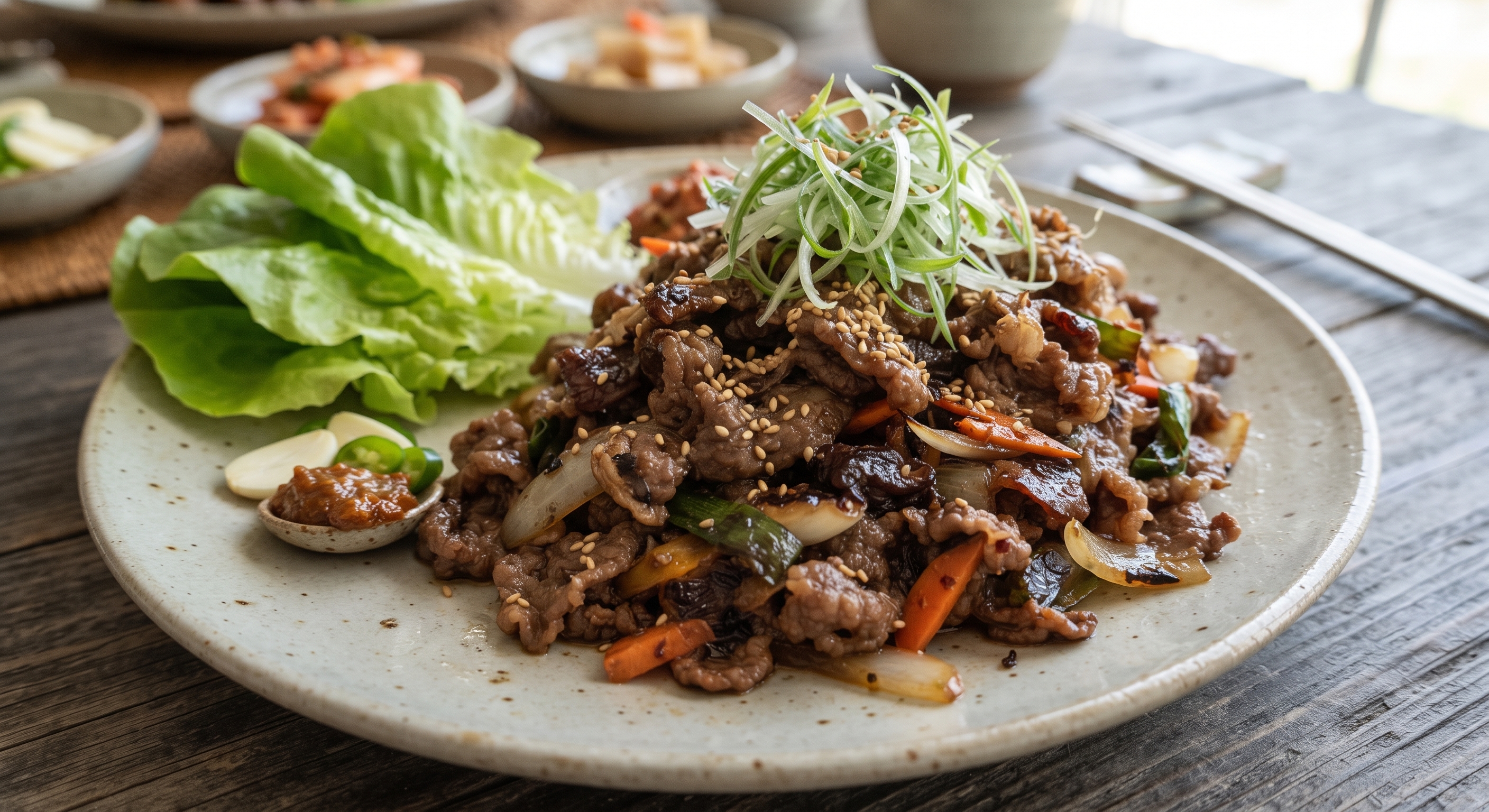
Serve bulgogi hot with steamed white rice, lettuce leaves for wrapping (ssam-style), and classic Korean sides like kimchi, pickled radish, or a simple cucumber salad. It’s also fantastic tucked into soft flour tortillas with a smear of gochujang mayo, or piled over a rice bowl with a fried egg on top.
Leftovers keep well in the fridge for 2-3 days and reheat beautifully in a hot skillet. The marinade flavors deepen overnight, so many people actually prefer day-two bulgogi. If you want to prep ahead, marinate the raw beef and freeze it flat in a zip-top bag for up to a month—thaw in the fridge overnight and cook as directed.