Dak Galbi (Spicy Stir-fried Chicken) with Rice Finish
- Prep
20 minutes - Cook
25 minutes - Serves
2-3 servings - Difficulty
easy
Ingredients
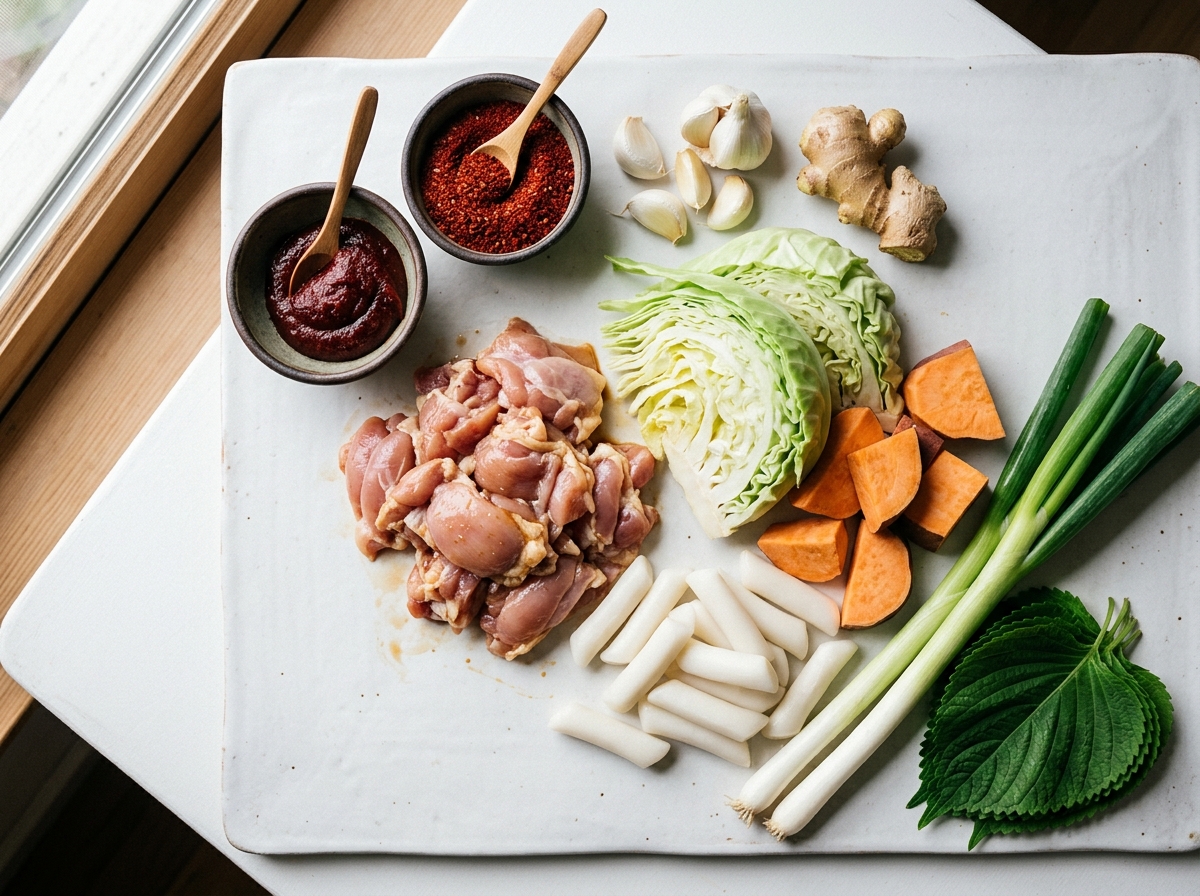
- 600g boneless chicken thighs, cut into bite-sized pieces
- 3 tablespoons gochujang (Korean red pepper paste)
- 1½ tablespoons gochugaru (Korean red pepper flakes)
- 2 tablespoons soy sauce
- 1½ tablespoons sugar
- 1 tablespoon rice wine (mirin or cooking sake)
- 1 tablespoon sesame oil
- 4 cloves garlic, minced
- 1 teaspoon ginger, minced
- ¼ cup water
- 200g garaetteok (cylinder rice cakes), soaked in cold water if hard
- 1 medium sweet potato (about 200g), cut into ½-inch rounds
- ¼ head green cabbage (about 200g), cut into bite-sized pieces
- 1 small onion, sliced
- 2-3 scallions, cut into 2-inch pieces
- 6-8 perilla leaves (optional, or substitute with basil)
- 1 tablespoon neutral oil
- Sesame seeds for garnish
- FOR FRIED RICE (optional): 2 cups cooked short-grain rice, 1 tablespoon butter, 1 tablespoon roasted seaweed flakes (gim), extra sesame oil
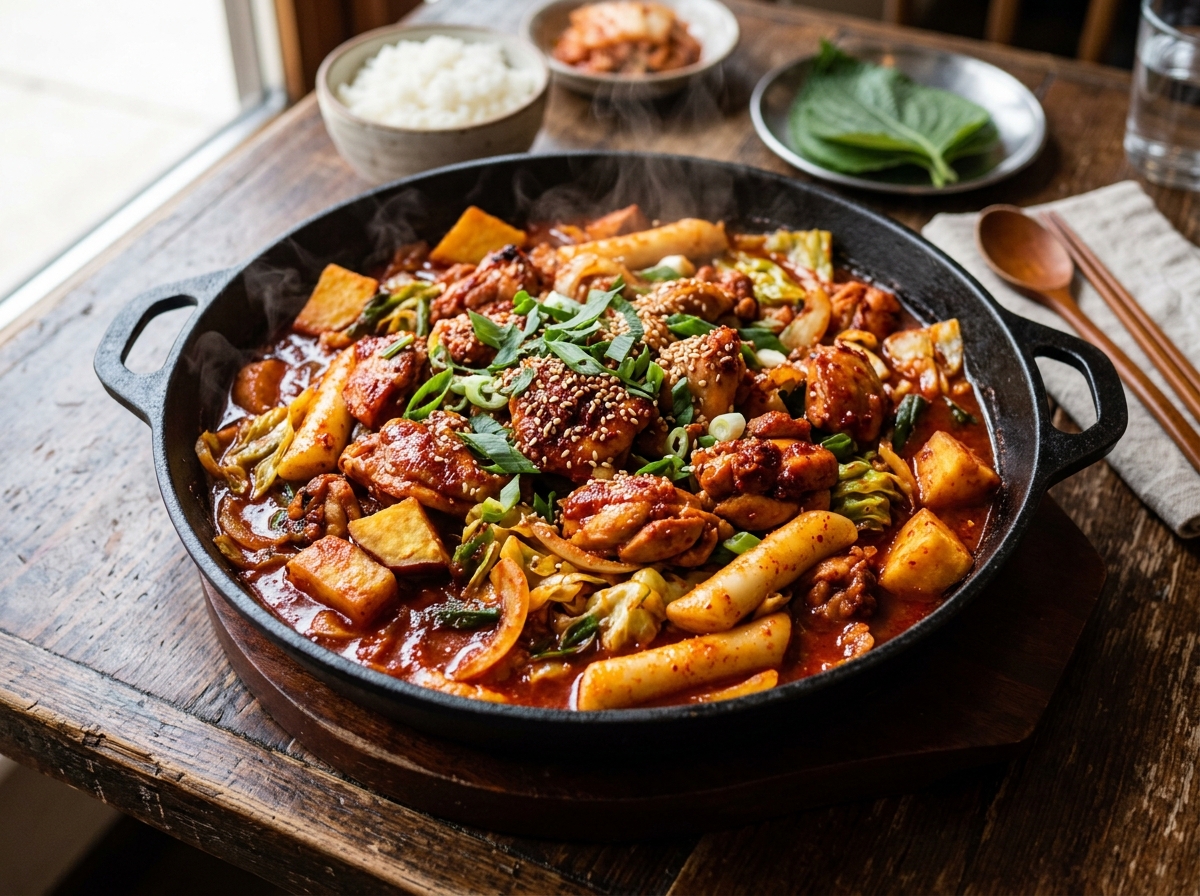
Dak galbi is the kind of dish that turns your kitchen into a lively Korean restaurant—sizzling, spicy, and interactive. Originating from Chuncheon, this stir-fried chicken gets its punch from gochujang and comes loaded with chewy rice cakes (tteok) and sweet potato that soak up all that gorgeous red sauce. The real magic happens at the end: when the chicken’s gone, you toss rice into the remaining sauce for bokkeumbap that might be better than the main event.
Make the Marinade
In a large bowl, whisk together the gochujang, gochugaru, soy sauce, sugar, rice wine, sesame oil, minced garlic, ginger, and water until smooth. The water helps the marinade coat everything evenly and prevents burning during cooking. Add the chicken pieces and massage the marinade in with your hands—let it sit for at least 10 minutes, though 30 minutes or overnight in the fridge builds even deeper flavor.
💡 Tip: Don’t skip the sugar. It balances the heat and helps create that sticky, caramelized coating dak galbi is known for.
Prep Your Add-Ins (Gyeotdeurineun Jaeryo)
The beauty of dak galbi is the supporting cast. Drain your rice cakes if you’ve soaked them—they should be pliable, not rock-hard. If you’re using fresh tteok, no soaking needed. Cut the sweet potato into ½-inch rounds so they cook through without turning to mush; thicker slices stay creamy inside while the edges caramelize. Cabbage adds crunch and a mild sweetness that cuts the spice, while onion and scallions bring aromatic depth. Have everything prepped and ready near your stove—this cooks fast once you start.
Start the Stir-Fry
Heat a large skillet or shallow pan (traditionally a wide, round pan) over medium-high heat and add the neutral oil. Add the sweet potato slices first and cook for 3-4 minutes per side until they start to soften and brown lightly. They take the longest, so giving them a head start ensures everything finishes together. Push them to the sides of the pan.
Add the Chicken and Vegetables
Add the marinated chicken to the center of the pan, spreading it out in a single layer as much as possible. Let it sear undisturbed for 2 minutes to develop some color, then start stir-frying. Add the cabbage, onion, and rice cakes, tossing everything together. The vegetables will release moisture, which helps create a glossy sauce. Cook for 8-10 minutes, stirring frequently, until the chicken is cooked through (no pink inside) and the rice cakes are soft and chewy. If the pan looks dry, splash in a tablespoon or two of water.
Finish and Garnish
When the chicken is cooked and the sauce has thickened and clings to everything, toss in the scallions and perilla leaves (if using). Stir for 1 more minute just to wilt the greens. The perilla adds an herbal, slightly minty note that’s traditional—if you can’t find it, fresh basil is a decent stand-in, or just skip it. Sprinkle sesame seeds over the top and serve immediately, straight from the pan if you’re going for that communal vibe.
The Essential Bokkeumbap (Fried Rice Finish)
Here’s the move everyone in Korea knows: when you’ve eaten most of the chicken and vegetables but there’s still plenty of spicy, sticky sauce left in the pan, don’t waste it. Add the cooked rice and butter directly into the pan over medium heat. Use a spatula to break up the rice and mix it thoroughly with the sauce for 3-4 minutes until every grain is coated and lightly crisped on the bottom. Drizzle with a bit more sesame oil and sprinkle roasted seaweed flakes (gim) on top. This fried rice is the reason many people order dak galbi in the first place.
Serving and Substitutions
Dak galbi is best enjoyed with friends, eaten straight from the pan with lettuce wraps (ssam) on the side if you want to go traditional. If you can’t find garaetteok, use any Korean rice cake shape you can get—even the oval tteokbokki kind works. No perilla? Try shiso leaves or just add extra scallions. For a milder version, cut the gochugaru in half and use only 2 tablespoons of gochujang. And if sweet potato isn’t available, regular potato or even kabocha squash works beautifully. Just remember: save room (and sauce) for that final fried rice.