Easy Kimchi Jjigae (Korean Kimchi Stew) Recipe
- Prep
10 minutes - Cook
20 minutes - Serves
2-3 servings - Difficulty
easy
Ingredients
- 2 cups well-fermented (sour) kimchi, roughly chopped, plus 2-3 tbsp of its juice
- 150g (5 oz) pork belly or pork shoulder, sliced thin (tofu or spam work as substitutes)
- 1 tbsp gochugaru (Korean red chili flakes) — optional, for extra heat and color
- 1 tsp minced garlic
- 1/2 small onion, sliced
- 1 green onion, chopped
- 1/2 block (200g) soft or medium tofu, sliced
- 1.5 cups water or anchovy broth
- 1 tsp gochujang (Korean chili paste) — optional
- 1 tsp soy sauce, to taste
- 1/2 tsp sugar (helps balance sour kimchi)
- 1 tsp sesame oil
If you only learn to make one Korean stew, make this one. Kimchi jjigae is the dish most Korean home cooks turn to when the kimchi in the fridge has gone properly sour — and that sourness is exactly what makes the stew taste right. Don’t reach for fresh, crisp kimchi here; the funkier and more fermented it is, the better.
Why sour kimchi matters
Fresh kimchi is bright and crunchy, but it doesn’t have the depth this stew needs. If your kimchi has been in the fridge for a few weeks and tastes noticeably sour, that’s ideal. If you only have fresh kimchi, you can still make this — just add an extra 1/2 teaspoon of vinegar near the end to mimic that sourness, and expect a milder flavor overall.
Step-by-step
1. Brown the pork first. In a pot over medium-high heat, add the pork belly (no oil needed — the fat will render) and cook for 2-3 minutes until lightly browned. This step matters more than people expect; it builds a savory base the stew is built on.
2. Add kimchi and aromatics. Add the chopped kimchi, onion, and garlic. Stir-fry everything together for 3-4 minutes, letting the kimchi caramelize slightly at the edges. This is where a lot of the flavor comes from.
3. Season and add liquid. Stir in the gochugaru and gochujang if using, then add the water or broth along with the kimchi juice. Bring to a boil, then reduce to a simmer for about 10 minutes so the flavors come together.
4. Add tofu and finish. Gently add the tofu slices (don’t stir too hard or they’ll break apart) and simmer for another 5 minutes. Taste and adjust — a little soy sauce if it needs more savoriness, a pinch of sugar if it’s too sour or sharp. Finish with sesame oil and chopped green onion right before serving.
Serving it right
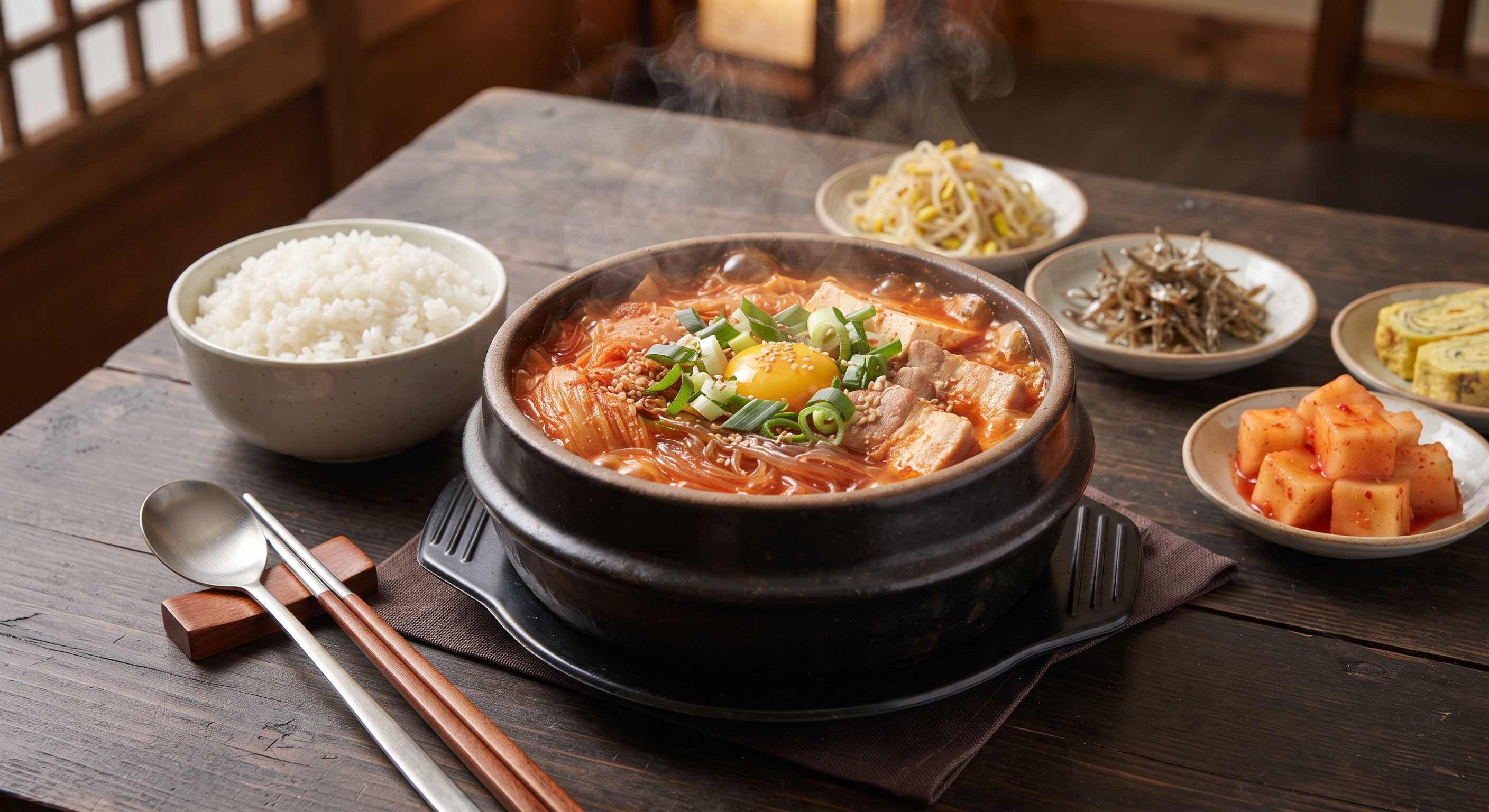
Kimchi jjigae is meant to be eaten straight from a hot pot or shallow bowl, bubbling, with a bowl of steamed short-grain rice on the side — not mixed in, served alongside. A couple of simple banchan (Korean side dishes) round it out nicely, but honestly, kimchi jjigae and rice alone is a complete, satisfying meal.
Common substitutions
No pork belly? Thin-sliced pork shoulder, canned spam, or even just tofu all work — this is a forgiving, everyday dish, not a strict recipe. No gochujang? Skip it; the gochugaru and kimchi juice carry most of the flavor on their own. If you can’t find gochugaru at all, a mix of a small amount of paprika and a pinch of cayenne gets you closer than skipping it entirely, though the flavor won’t be quite the same.