Gimbap (Korean Seaweed Rice Rolls)
- Prep
30 minutes - Cook
20 minutes - Serves
3-4 servings (3-4 rolls) - Difficulty
medium
Ingredients
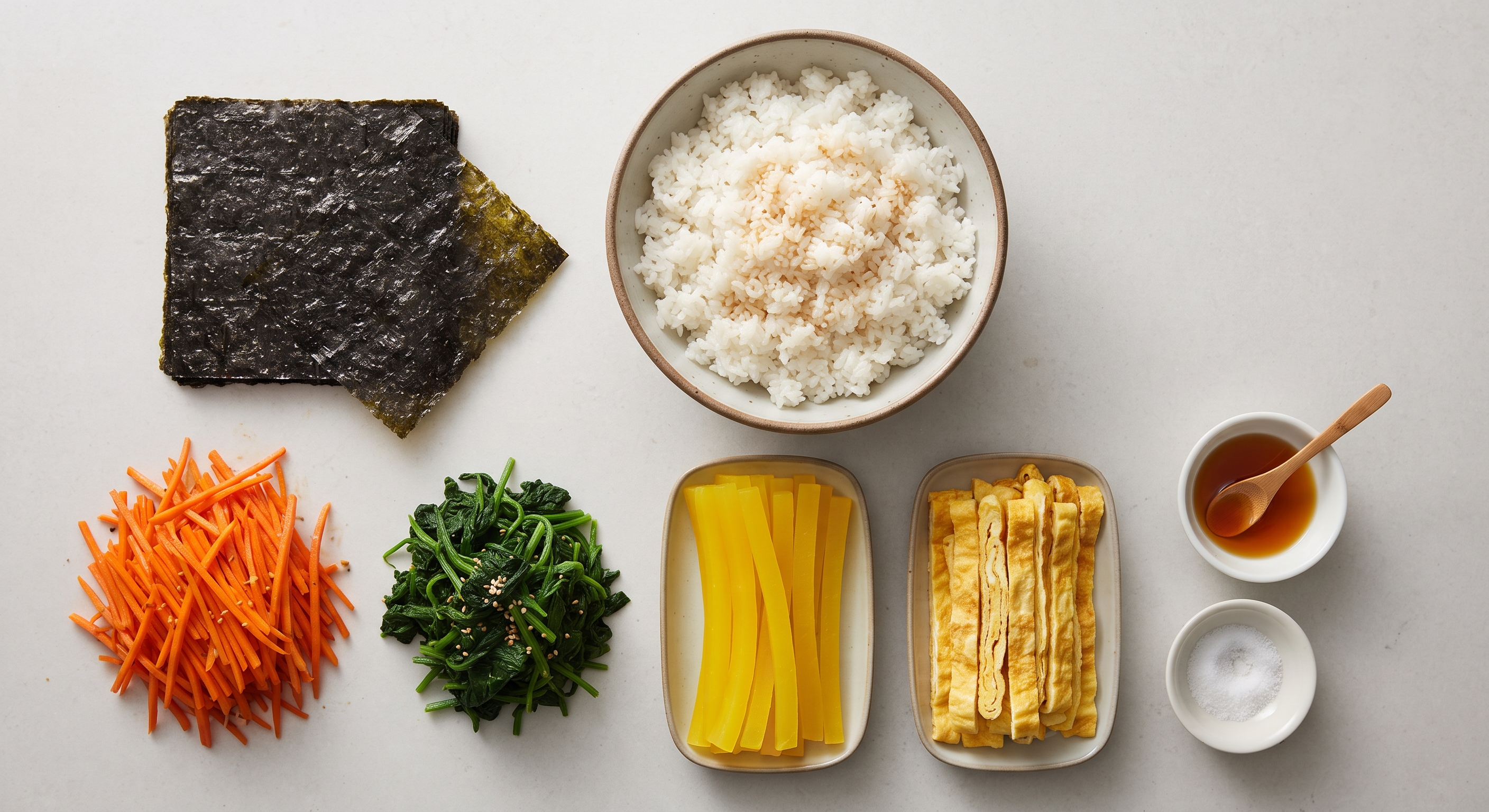
- 3 cups cooked short-grain white rice (warm, freshly made)
- 4 sheets roasted gim (Korean seaweed for gimbap)
- 2 tablespoons sesame oil, divided
- 1 teaspoon salt, divided
- 4 eggs
- 1 medium carrot, julienned
- 4-5 ounces fresh spinach (about 4 cups loosely packed)
- 8 strips yellow danmuji (Korean pickled radish)
- 4 imitation crab sticks (or 4 ounces cooked beef/ham)
- 1 tablespoon vegetable oil (for cooking)
- 1 teaspoon soy sauce
- 1 clove garlic, minced
- Toasted sesame seeds for finishing
Gimbap is Korea’s answer to the perfect portable meal—tidy, colorful, and completely customizable. Unlike sushi, the rice is seasoned simply with sesame oil and salt, and the fillings are all cooked or pickled, making it safer for packed lunches and picnics. The secret to great gimbap isn’t fancy ingredients; it’s in how you season the rice and how tightly you roll.
Season the Rice (밥 간하는 법)
This step makes or breaks your gimbap. While your rice is still warm (ideally just cooked and rested for 5 minutes), transfer it to a large shallow bowl. Drizzle 1 tablespoon sesame oil and sprinkle ½ teaspoon salt over the rice. Gently fold with a rice paddle or wooden spoon using a cutting motion—don’t smash the grains. Taste a pinch: you should notice a subtle nutty richness and just enough salt to make the rice interesting on its own. If it tastes flat, add a tiny bit more salt. Let the rice cool to barely warm or room temperature before rolling; rice that’s too hot will make your gim soggy and hard to handle.
💡 Tip: Many beginners under-season the rice. It should taste lightly salted and fragrant—remember, it’s the base that holds all the fillings together.
Prepare the Fillings
Spinach: Blanch the spinach in boiling water for 30 seconds, then shock in ice water and squeeze out every drop of moisture. Chop roughly, then season with ½ teaspoon sesame oil, a pinch of salt, and the minced garlic. Mix well and set aside.
Carrot: Heat a small pan over medium heat with a drizzle of vegetable oil. Sauté the julienned carrot for 2-3 minutes until just softened but still bright orange. Season with a pinch of salt. Remove and cool.
Egg: Beat the eggs with a pinch of salt. Heat a nonstick pan lightly oiled over medium-low heat. Pour in the egg to make a thin, even layer (you may need to do this in two batches). Cook until just set, about 1-2 minutes, then flip briefly. Let cool, then slice into long ½-inch-wide strips.
Other fillings: Pat the imitation crab sticks dry and leave whole, or slice lengthwise if they’re thick. Cut danmuji into long sticks if not pre-cut. Everything should be ready and at room temperature before you start rolling.
Roll the Gimbap (마는 요령)
Lay one sheet of gim shiny-side down on a bamboo rolling mat (or a piece of parchment if you don’t have a mat—it’s harder but doable). Wet your hands lightly and spread about ¾ cup seasoned rice evenly over the gim, leaving a 1-inch bare strip along the top edge. Press the rice gently into an even layer about ¼-inch thick; don’t pile it too thick or your roll will burst.
Arrange your fillings in a horizontal line about one-third up from the bottom edge: a strip of egg, a line of spinach, a few pieces of carrot, 2 danmuji strips, and a crab stick. Don’t overload—less is more for a tight, clean roll.
Lift the bottom edge of the mat and fold it over the fillings snugly, using your fingers to tuck and compress the ingredients as you roll away from you. Apply firm, even pressure as you continue rolling, pulling the mat back as you go so it doesn’t get rolled inside. When you reach the bare strip of gim, dab it lightly with water (or a grain of rice smashed as “glue”) and finish the roll seam-side down. Give the whole roll a final gentle squeeze in the mat to compact it.
Lightly brush the outside of the roll with a bit of sesame oil for sheen and flavor. Let the roll rest seam-side down for 2-3 minutes before slicing—it helps the seal set.
Slice and Serve
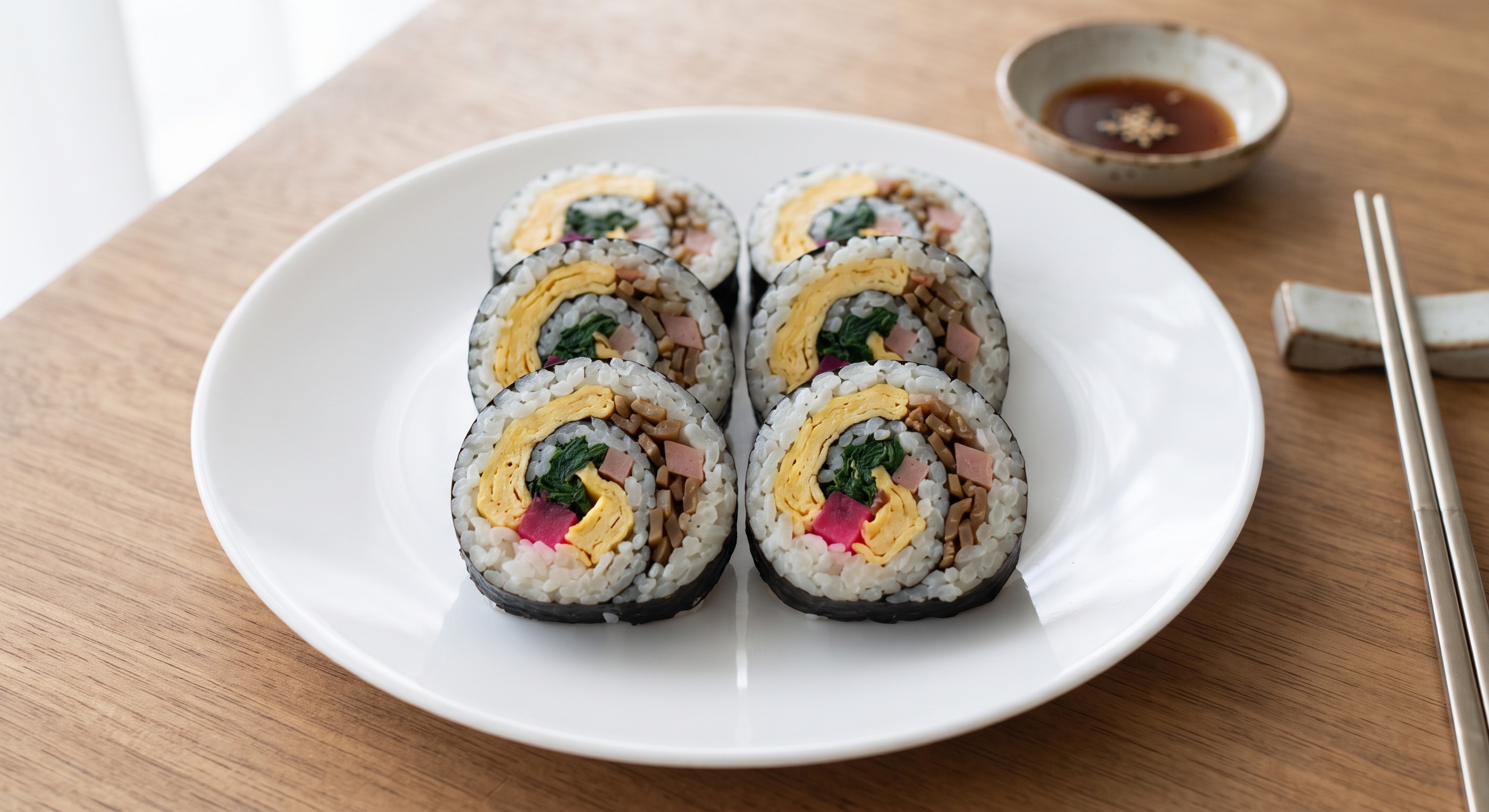
Use a sharp knife, wiped clean and lightly oiled between cuts. Slice the roll into 6-8 pieces about 1-inch thick, using a gentle sawing motion rather than pressing straight down (which squashes the roll). Arrange cut-side up on a plate and sprinkle with toasted sesame seeds.
Gimbap is best eaten within a few hours, but it will keep in the fridge for up to a day—just know the gim will lose its crispness. Serve at room temperature with a little bit of danmuji brine or soy sauce on the side if you like, though classic gimbap is delicious as-is.
Filling Combinations (속재료 조합 추천)
The version above is classic “basic” gimbap, but once you master the technique, play around: chamchi (tuna) gimbap uses canned tuna mixed with mayo and a bit of hot pepper paste; bulgogi gimbap wraps thin slices of marinated beef; cheese gimbap adds a strip of cheddar or processed cheese for kids. Kimchi gimbap uses well-drained, finely chopped kimchi for a tangy kick. Just remember: keep fillings relatively dry, balance colors for visual appeal, and always, always season that rice.