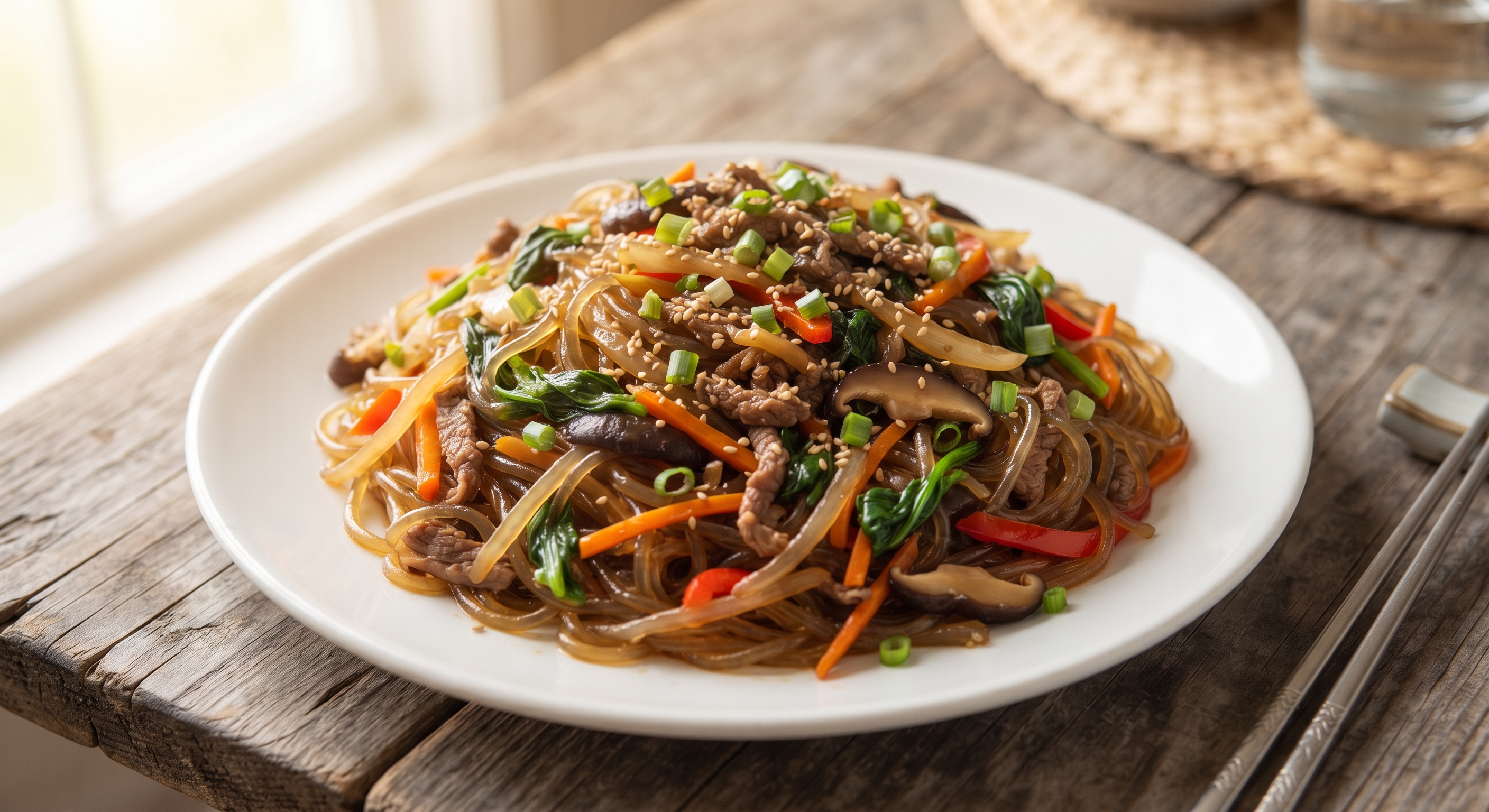
Japchae (Korean Glass Noodle Stir-Fry)
- Prep
30 minutes - Cook
25 minutes - Serves
4 servings - Difficulty
medium
Ingredients
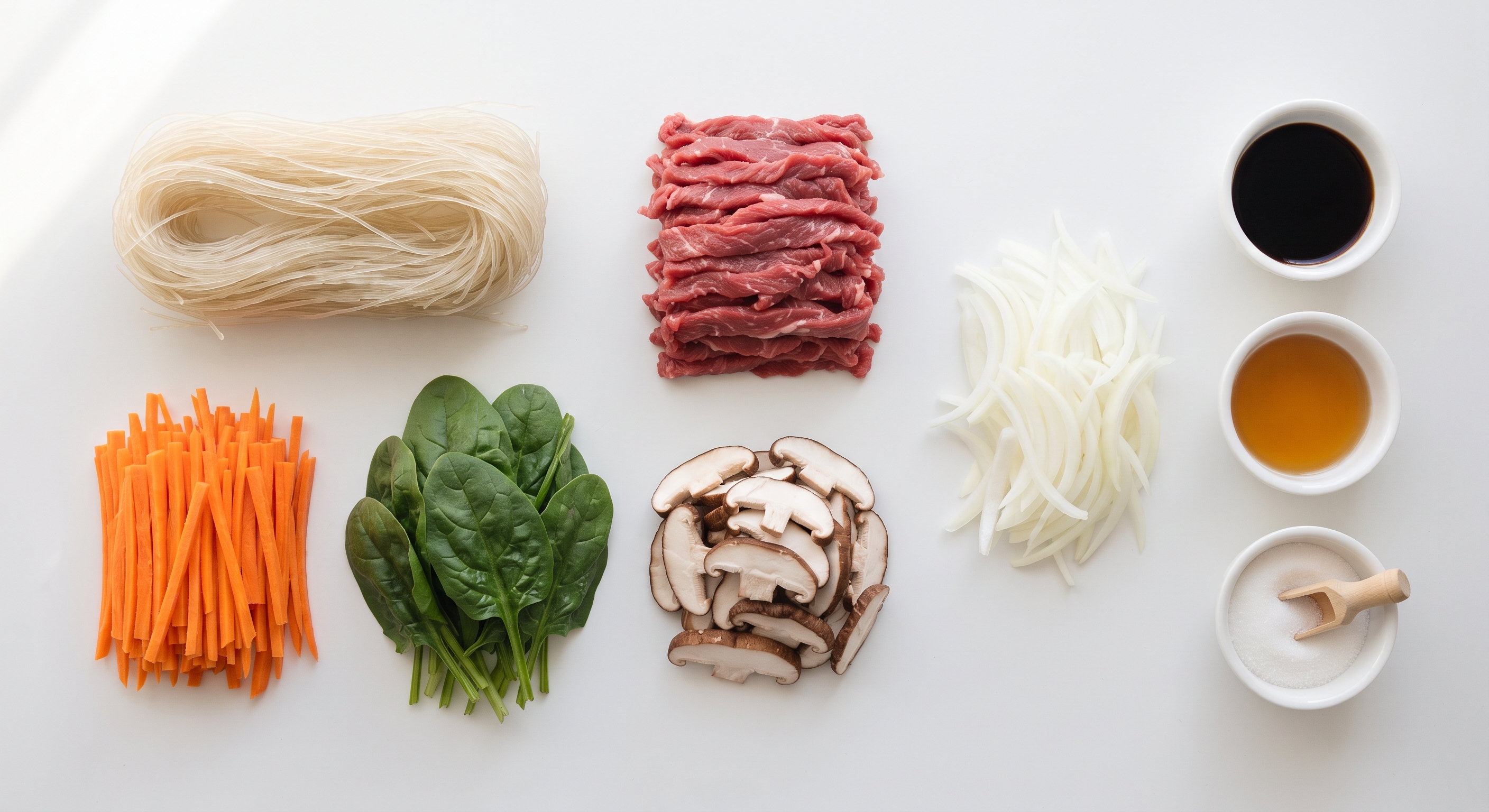
- 8 oz (225g) dangmyeon (Korean sweet potato starch noodles)
- 6 oz (170g) beef (sirloin or ribeye), thinly sliced into strips
- 5-6 dried shiitake mushrooms (or 6 oz fresh mushrooms, sliced)
- 1 medium carrot, julienned
- 1/2 medium onion, thinly sliced
- 2 cups fresh spinach
- 4-5 scallions, cut into 2-inch lengths
- 3 cloves garlic, minced
- 3 tablespoons soy sauce
- 2 tablespoons sugar
- 3 tablespoons sesame oil, divided
- 2 tablespoons neutral cooking oil (vegetable or canola), divided
- 1 tablespoon toasted sesame seeds
- Salt and black pepper to taste
- Optional: 1 egg for garnish, 1 red bell pepper julienned
Japchae is Korea’s beloved glass noodle stir-fry, a dish that shows up at every celebration from birthdays to Lunar New Year. The hallmark is those glossy, chewy dangmyeon noodles tangled with individually seasoned vegetables and meat. Getting it right means understanding two crucial techniques: cooking the noodles to the exact texture, and why Korean cooks insist on stir-frying each ingredient separately before mixing everything together.
Prepare the noodles
If using dried shiitake mushrooms, soak them in warm water for 20-30 minutes until softened, then squeeze out excess water and slice thinly. Save that soaking liquid if you want—it adds great umami to the sauce.
Bring a large pot of water to a rolling boil. Add the dangmyeon noodles and cook for exactly 6-7 minutes. This timing is critical: undercook and they’re chalky in the center; overcook and they turn mushy and break apart when you stir-fry. The noodles should be translucent and pleasantly chewy with a slight bounce. Drain and rinse under cold water to stop the cooking, then use kitchen scissors to cut them 2-3 times (they’re extremely long otherwise). Toss with 1 tablespoon sesame oil to prevent sticking and set aside.
💡 Tip: Dangmyeon continues to absorb liquid after draining, so slightly firmer than you think is perfect—they’ll soften more when tossed with the other ingredients.
Marinate the beef
In a small bowl, combine the beef strips with 1 tablespoon soy sauce, 1 teaspoon sugar, 1 clove minced garlic, and a pinch of black pepper. Mix well and let it sit while you prep the vegetables. This brief marination tenderizes the meat and seasons it properly.
Stir-fry each ingredient separately
Here’s where japchae diverges from typical stir-fries. Each vegetable cooks separately because they all need different heat levels and cooking times, and this keeps their individual colors and textures distinct instead of creating a muddled, watery mess.
Heat a large skillet or wok over medium-high heat with 1 teaspoon cooking oil. Add the spinach with a pinch of salt and stir-fry for 30-40 seconds until just wilted. Transfer to a large mixing bowl. Without washing the pan, add another teaspoon of oil and cook the carrots for 1-2 minutes until slightly softened but still crisp. Add to the bowl. Repeat with the onions (1-2 minutes until translucent), mushrooms (2-3 minutes until tender), and scallions (30 seconds), adding each to the bowl as they finish. Season each lightly with a pinch of salt as you go.
Cook the beef
Wipe the pan if needed and heat 1 tablespoon cooking oil over high heat. Add the marinated beef in a single layer and sear without moving for 1 minute, then stir-fry for another 1-2 minutes until just cooked through and lightly caramelized. Don’t overcook—thin beef strips dry out quickly. Add to the bowl with the vegetables.
Make the sauce and combine
In a small bowl, whisk together the remaining 2 tablespoons soy sauce, 1 tablespoon sugar, 2 cloves minced garlic, and 2 tablespoons sesame oil. Taste it—it should be balanced between salty, sweet, and nutty.
Add the noodles to the large bowl with all the cooked ingredients. Pour the sauce over everything and use tongs or your hands (let things cool slightly first) to gently but thoroughly toss everything together for 1-2 minutes. The noodles should be evenly coated and glossy, and the vegetables distributed throughout. If the noodles seem dry or sticky, add another small drizzle of sesame oil.
Serve
Transfer to a serving platter and sprinkle with toasted sesame seeds. Japchae is traditionally served at room temperature or slightly warm, which actually makes it perfect for meal prep or potlucks. The flavors meld and deepen as it sits.
Substitutions: Can’t find dangmyeon? Unfortunately, there’s no perfect substitute—rice noodles or other Asian noodles have completely different textures. Dangmyeon is increasingly available in regular supermarkets (look in the international aisle) or any Asian grocery. For the vegetables, use what you have: bell peppers, zucchini, or bok choy all work. Omit the beef entirely for a vegetarian version, or swap in chicken or shrimp. The separate stir-frying technique stays the same regardless—that’s what gives japchae its signature texture and visual appeal.