Jeyuk Bokkeum (Spicy Stir-fried Pork)
- Prep
15 minutes - Cook
12 minutes - Serves
3-4 servings - Difficulty
easy
Ingredients
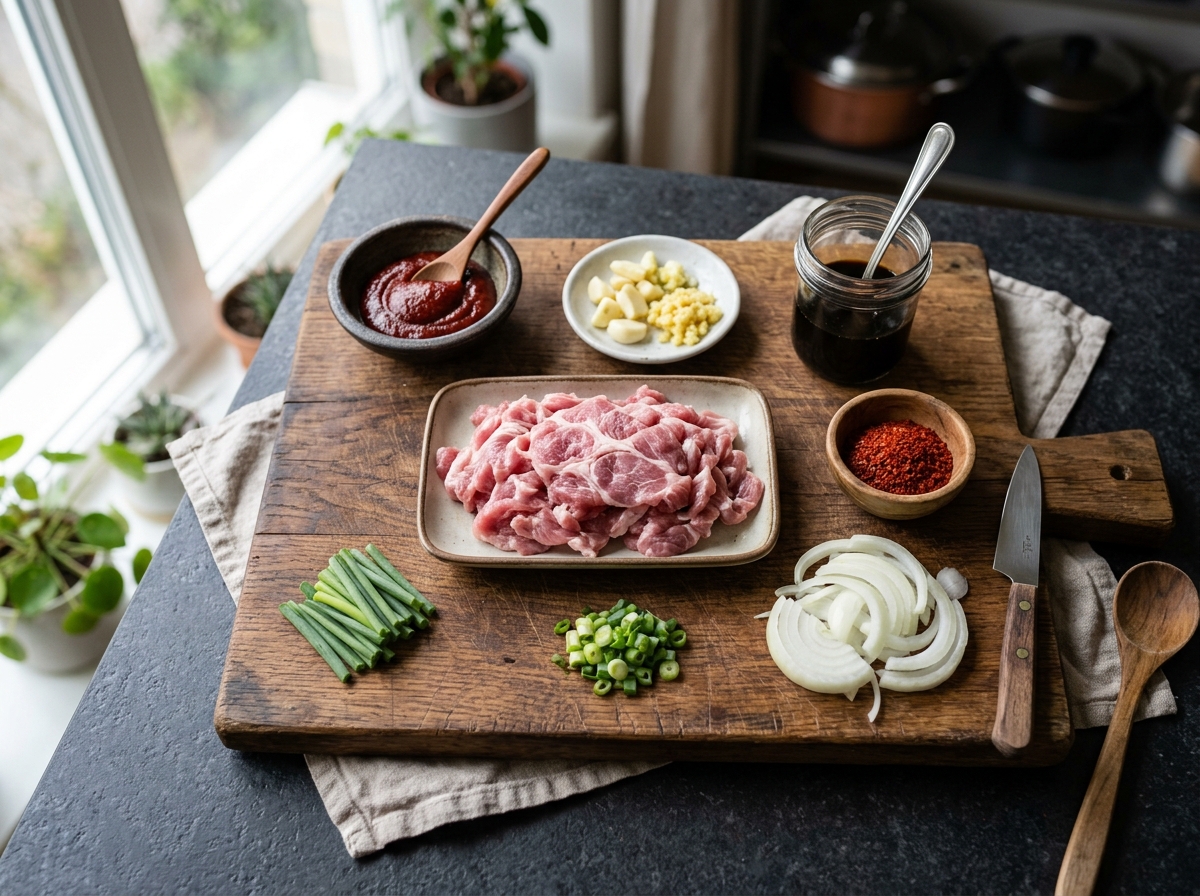
- 600g pork shoulder (or pork belly), thinly sliced
- 3 tablespoons gochujang (Korean red chili paste)
- 2 tablespoons gochugaru (Korean red chili flakes)
- 2 tablespoons soy sauce
- 2 tablespoons sugar
- 1 tablespoon honey or corn syrup
- 1 tablespoon sesame oil
- 5 cloves garlic, minced
- 1 teaspoon fresh ginger, minced
- 1 medium onion, sliced
- 3-4 green onions, cut into 2-inch pieces
- 1 tablespoon neutral oil (vegetable or canola)
- Sesame seeds for garnish (optional)
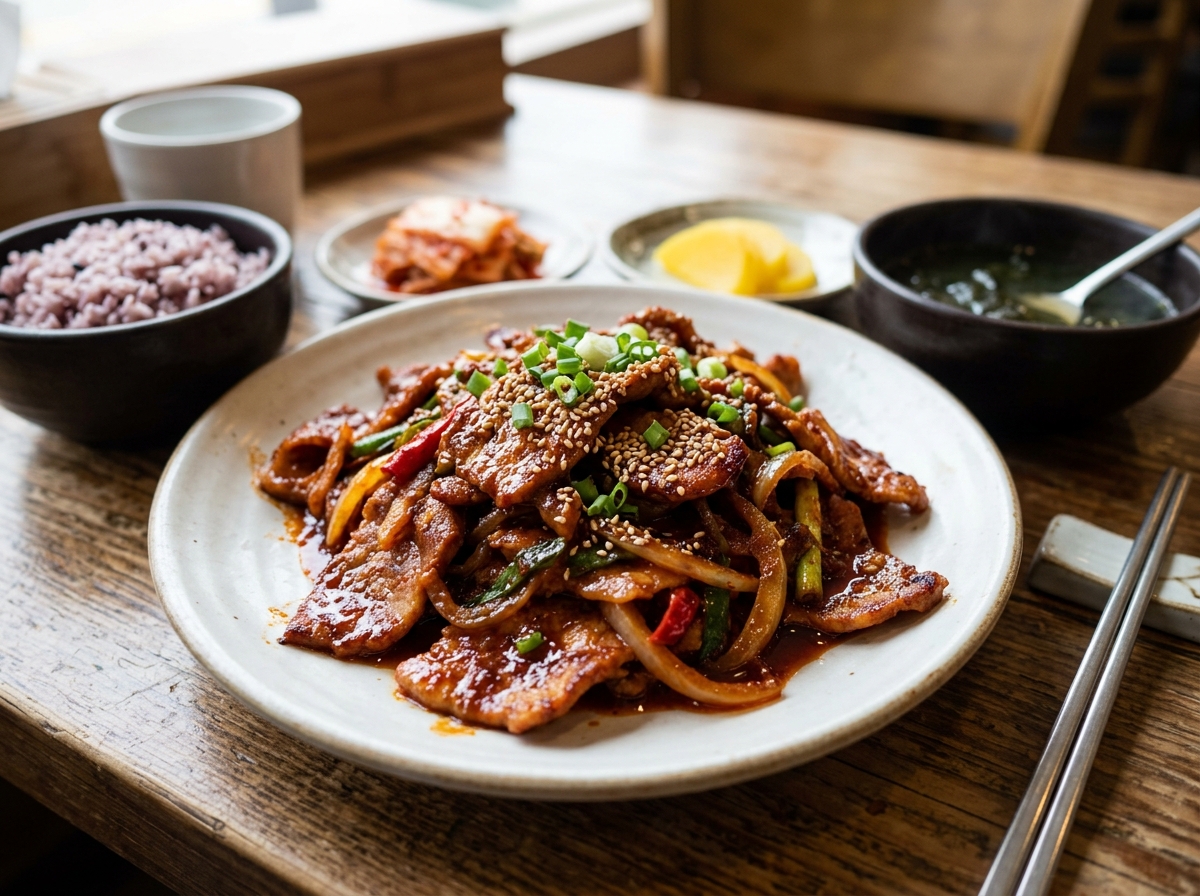
Jeyuk bokkeum is one of those dishes that seems deceptively simple until you taste it done right—sweet, spicy, savory, with pork that’s tender inside and caramelized at the edges. The secret isn’t exotic technique; it’s marinating the meat properly and knowing how to manage your heat so the sauce clings and glazes instead of steaming the meat into gray sadness. This is weeknight-friendly food that tastes like you know what you’re doing.
Marinate the Pork (Essential Step)
In a large bowl, combine the gochujang, gochugaru, soy sauce, sugar, honey, sesame oil, minced garlic, and ginger. Mix until the sugar dissolves and everything forms a thick, deep red paste. Add the sliced pork and massage the marinade into every piece with your hands—this isn’t the time to be dainty. Let it sit for at least 30 minutes at room temperature, or up to 4 hours in the fridge.
This marinating time (밑간 시간) is non-negotiable if you want flavor in the meat, not just on it. The gochujang and sugar need time to penetrate the pork, and the enzymes in the garlic and ginger start to tenderize the protein. If you’re pressed for time, 30 minutes will work, but an hour or two is noticeably better.
💡 Tip: Pork shoulder is leaner and more economical than belly, but belly gives you richer flavor and those irresistible crispy fat edges. Use what you prefer or can find—both work beautifully.
Prep Your Vegetables
While the pork marinates, slice the onion into roughly ½-inch-thick pieces and cut the green onions into 2-inch segments. You want them sturdy enough to hold up to high heat without turning to mush. Set them aside—you’ll add them partway through cooking so they stay crisp-tender, not soggy.
Stir-Fry Over High Heat
Heat a large skillet or wok over high heat until it’s properly hot—a drop of water should sizzle and evaporate immediately. Add the neutral oil and swirl to coat. Working in batches if your pan isn’t huge, add the marinated pork in a single layer. Let it sit undisturbed for 45-60 seconds before stirring. This is the key to avoiding sticking (눌러붙지 않게): if you stir too early, the marinade will glue the meat to the pan. Once the bottom caramelizes and releases naturally, toss and stir-fry for 3-4 minutes until the pork is mostly cooked through and the edges start to char.
Add the sliced onion and stir-fry for another 2 minutes, letting it soften slightly and pick up color. The onion will release a little moisture, which helps deglaze any sticky bits and keeps everything from burning. Finally, toss in the green onions and cook for 1 more minute—just long enough to take the raw edge off but keep them bright and snappy.
Finishing Touches
The sauce should be thick, glossy, and clinging to every piece of pork and vegetable. If it looks too dry, add a tablespoon of water; if it’s too wet and pooling, crank the heat and let it reduce for 30 seconds. Transfer to a serving plate and sprinkle with sesame seeds if you like.
Serving and Substitutions
Serve jeyuk bokkeum with steamed rice, lettuce or perilla leaves for wraps (ssam), and a few banchan. Kimchi and a simple cucumber salad are classic partners. If you can’t find gochujang, there’s no perfect substitute, but a mix of miso, sriracha, and a pinch of sugar can get you partway there—though I’d encourage ordering gochujang online, since it keeps for months and unlocks a dozen other Korean dishes. For a milder version, dial back the gochugaru or skip it entirely; the gochujang alone still gives you plenty of flavor and a gentle kick.
Leftovers reheat beautifully and make an excellent filling for kimbap, fried rice, or even tacos if you’re feeling adventurous.