Kimchi Fried Rice (Kimchi Bokkeumbap)
- Prep
10 minutes - Cook
12 minutes - Serves
2 servings - Difficulty
easy
Ingredients
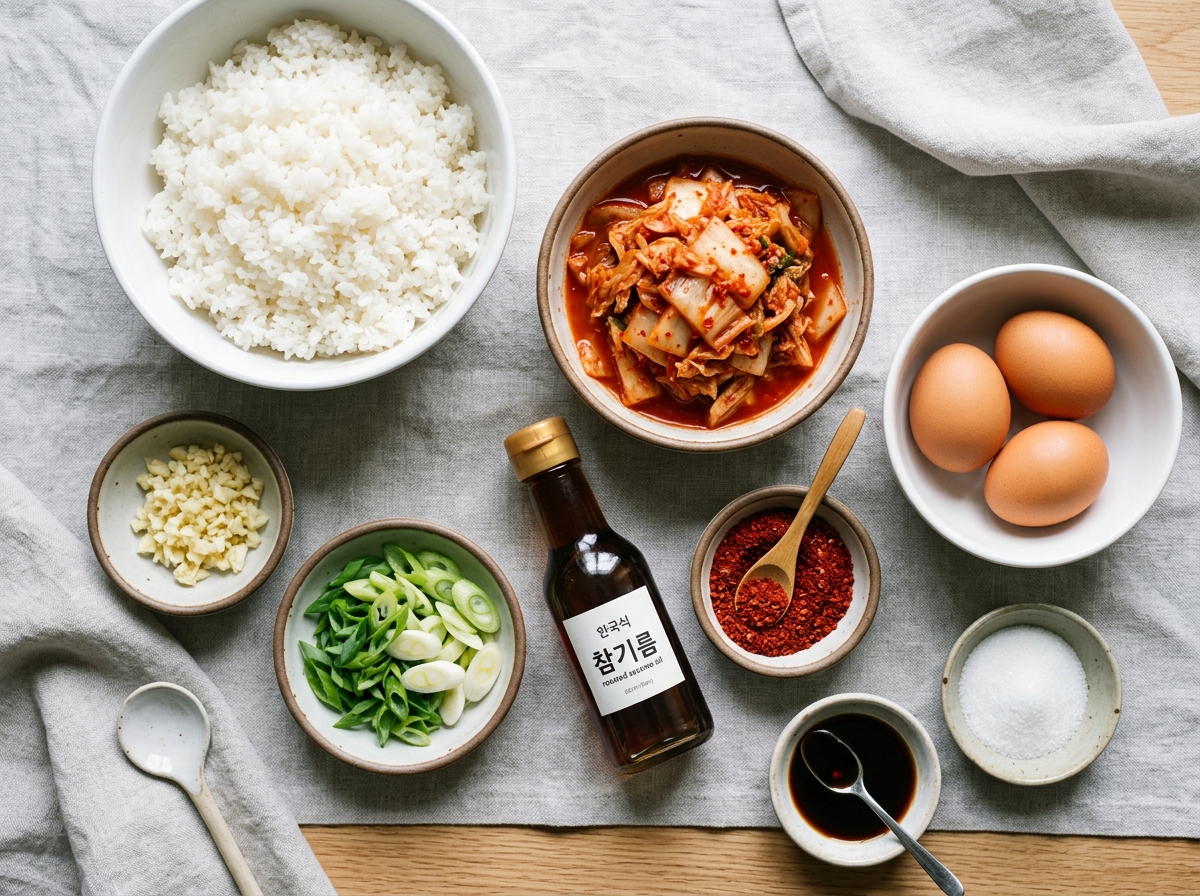
- 2 cups cooked short-grain white rice, preferably day-old and cold
- 1½ cups sour kimchi (older, fermented kimchi), chopped
- 3 tablespoons kimchi brine (liquid from the jar)
- 2 tablespoons neutral oil (vegetable or canola), divided
- 2 cloves garlic, minced
- 2 green onions, chopped (white and green parts separated)
- 1 tablespoon gochugaru (Korean red pepper flakes), or to taste
- 1 tablespoon soy sauce
- 1 teaspoon sugar
- 1 tablespoon sesame oil
- 2 eggs (for frying)
- Toasted sesame seeds, for garnish
- Roasted seaweed strips (gim), optional for serving
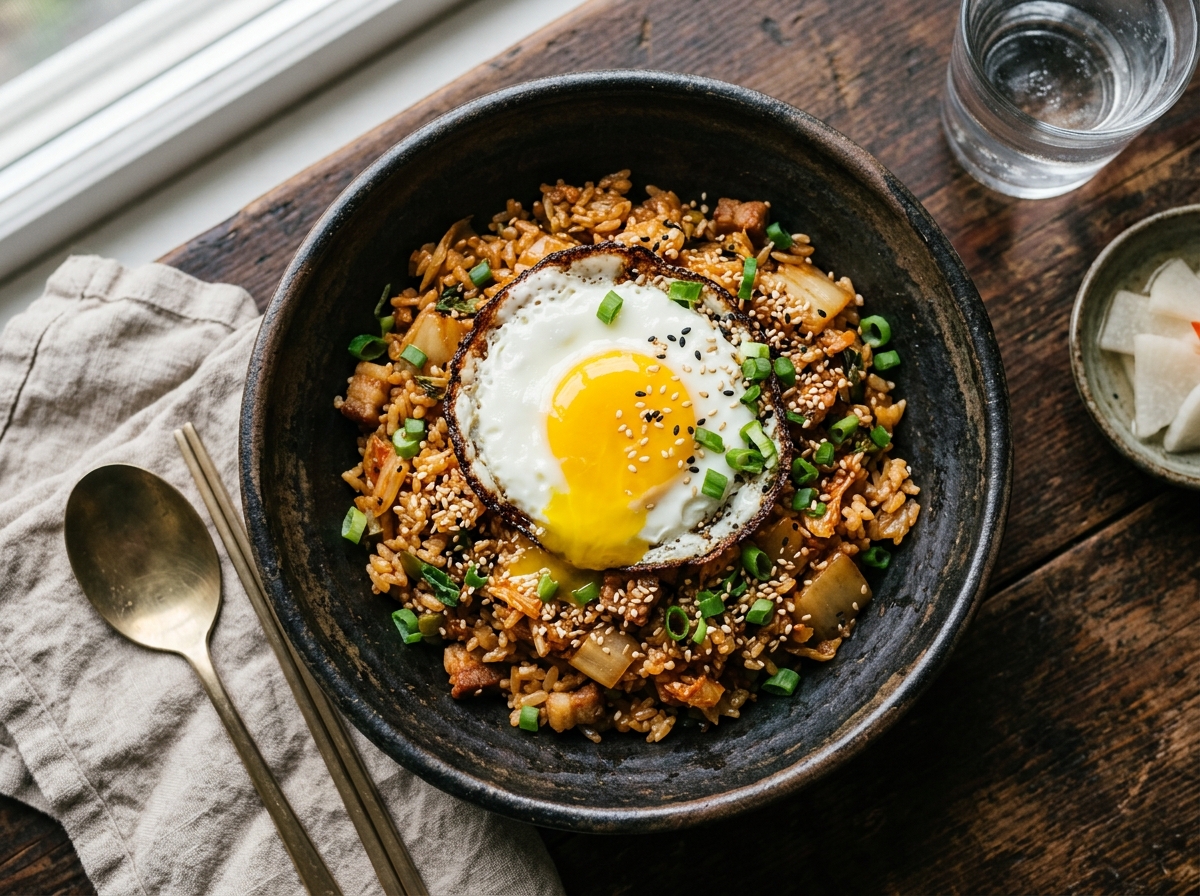
This is the dish every Korean home cook makes when the kimchi jar has been sitting in the fridge just a little too long—and that’s exactly when it’s best. Kimchi bokkeumbap transforms older, tangier kimchi into something deeply savory and satisfying, and it comes together in about the time it takes to decide what to order for delivery. The crowning glory is a fried egg with a runny yolk that turns each bite silky and rich.
Why Older Kimchi Works Best
Fresh kimchi is great on its own, but for fried rice you want sour, well-fermented kimchi—the kind that’s been in your fridge for a few weeks and tastes intensely tangy. As kimchi ferments, it develops deeper umami and acidity that caramelize beautifully when stir-fried. If your kimchi is still young and crunchy, let it sit out at room temperature for a day or two, or just accept that the flavor will be milder. Don’t toss that kimchi brine, either—it’s packed with flavor and will season the rice from the inside out.
Prep Your Ingredients
Use cold, day-old rice if you can. Freshly cooked rice is too moist and will turn mushy when stir-fried; refrigerated rice has dried out just enough to fry up with distinct, slightly chewy grains. If you only have fresh rice, spread it on a plate and refrigerate uncovered for 30 minutes. Chop your kimchi into bite-sized pieces (about ½-inch), and have everything else measured and ready—this cooks fast.
Stir-Fry the Kimchi First
Heat a large skillet or wok over medium-high heat and add 1 tablespoon of neutral oil. Add the chopped kimchi and stir-fry for 3-4 minutes until it softens and the edges start to caramelize. You’ll smell the sweetness developing and see the color deepen slightly. This step is crucial: it mellows the raw fermented punch and concentrates the flavor. Add the minced garlic and white parts of the green onion, stir for 30 seconds until fragrant.
Add the Rice and Season
Add the cold rice to the pan, breaking up any clumps with your spatula. Pour in the kimchi brine, soy sauce, sugar, and gochugaru, then stir everything together thoroughly. Stir-fry for 4-5 minutes, pressing the rice into the pan occasionally to get some crispy bits on the bottom (this is the good stuff). The rice should look evenly coated and slightly glistening. Taste and adjust: add more gochugaru for heat, a splash more soy sauce for saltiness, or a pinch of sugar if the kimchi is very sour. Drizzle the sesame oil over the rice, toss once more, then fold in the green parts of the green onion. Transfer to serving bowls.
💡 Tip: If you eat meat, this is a great place to use leftover cooked pork belly, bacon, or Spam—chop it small and fry it before you add the kimchi for extra richness.
Fry the Eggs
Wipe out the pan (or use a separate small nonstick skillet) and heat the remaining 1 tablespoon of oil over medium heat. Crack in the eggs and fry them sunny-side up for 2-3 minutes until the whites are set but the yolks are still runny. If you like crispy edges, turn the heat to medium-high and spoon hot oil over the whites as they cook. Carefully slide one fried egg onto each bowl of rice.
Serving and Variations
Serve immediately, garnished with toasted sesame seeds and, if you have it, torn strips of roasted seaweed (gim) on the side. The traditional move is to break the yolk and let it run into the rice, mixing everything together as you eat. Kimchi fried rice is endlessly flexible: swap the fried egg for scrambled if you prefer, add diced zucchini or mushrooms with the kimchi, or stir in a handful of cheese (mozzarella or American) at the end for a creamy, indulgent twist that’s wildly popular in Korea.
For a vegan version, skip the egg and top with extra sesame seeds, avocado slices, or crispy fried tofu. Use a touch more sesame oil to make up for the richness you’d get from the yolk. The kimchi itself is usually vegan-friendly, but check the label—some brands include fish sauce or shrimp.
This is the ultimate clean-out-the-fridge meal, and honestly, one of the most crave-worthy things you can make in under fifteen minutes.