Samgyeopsal at Home (Pan-Grilled Pork Belly with Ssam)
- Prep
15 minutes - Cook
12 minutes - Serves
2-3 servings - Difficulty
easy
Ingredients
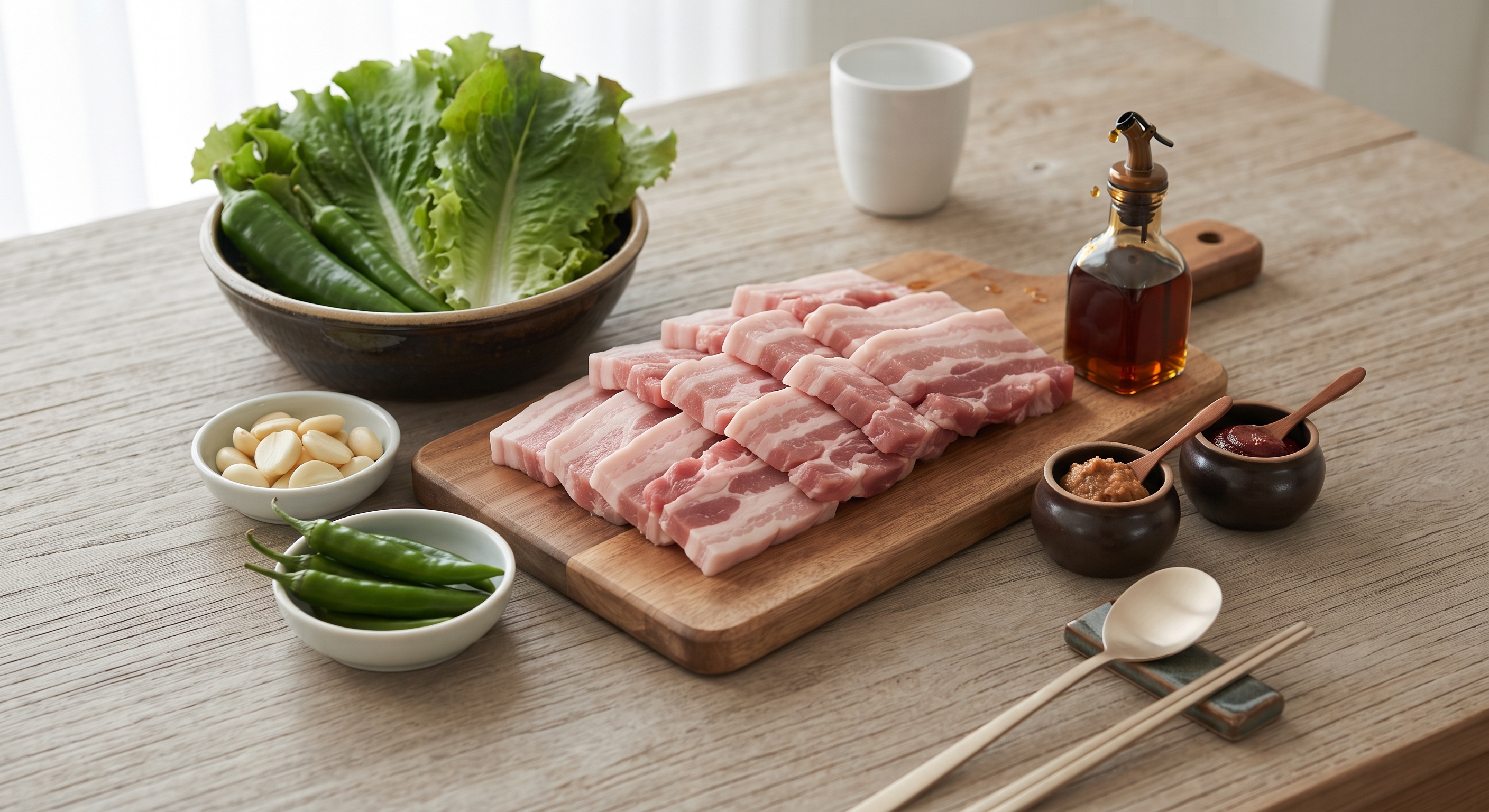
- 1 lb (450g) pork belly, skin removed, sliced 1/4-inch thick
- 1 head green or red leaf lettuce, leaves separated and washed
- 6-8 garlic cloves, sliced thin
- 2-3 green Korean peppers (or jalapeños), sliced
- 2 tbsp doenjang (Korean soybean paste)
- 1 tbsp gochujang (Korean red pepper paste)
- 1 tsp sesame oil
- 1 tsp toasted sesame seeds
- 1/2 tsp sugar
- 1 green onion, minced
- Coarse sea salt for serving
- Sesame oil for dipping (optional)
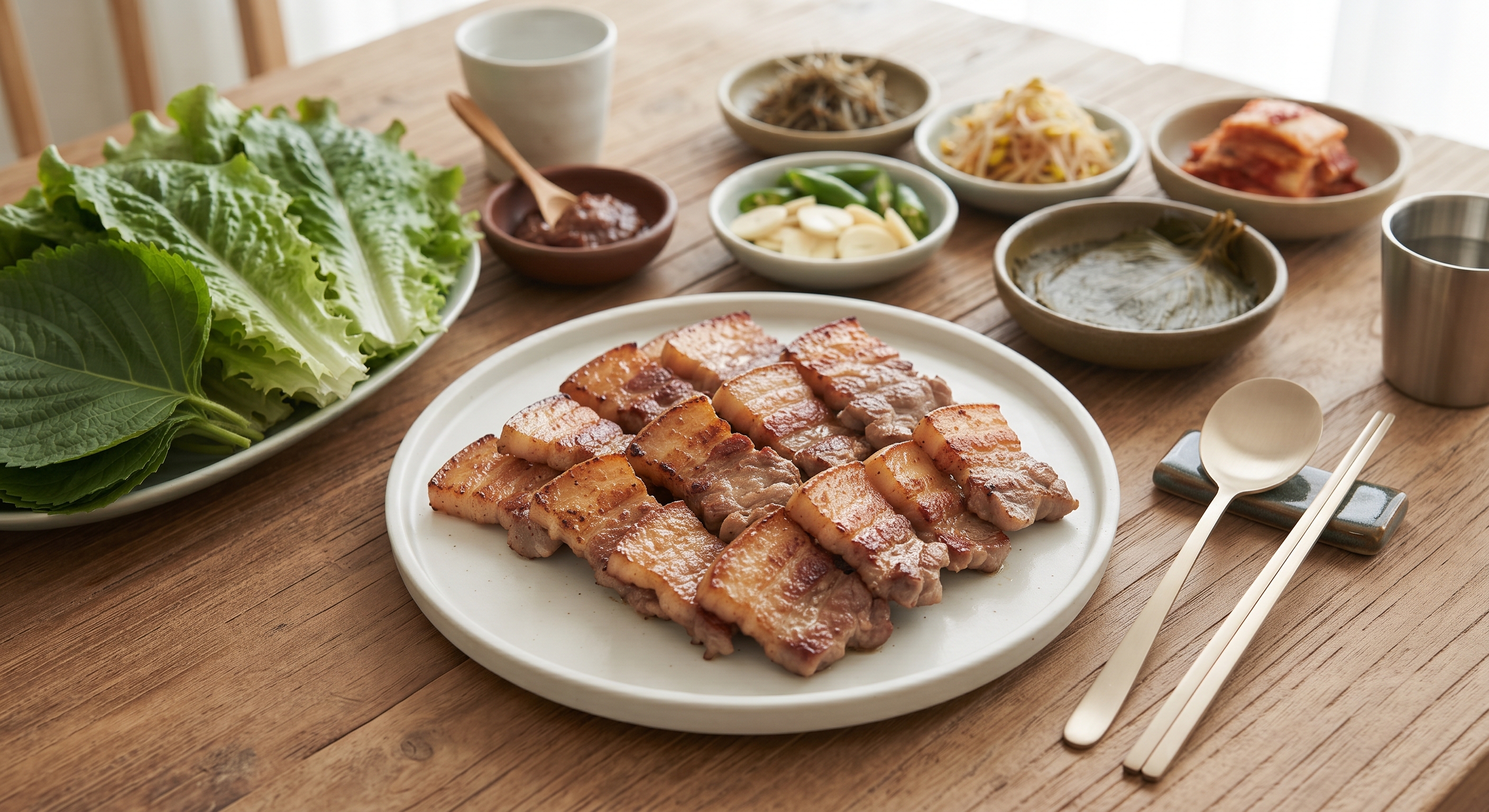
Samgyeopsal is less about complexity and more about texture—you want the outside crispy and caramelized, the inside tender and juicy, with just enough rendered fat to make each bite rich without being greasy. At a Korean BBQ restaurant, you’d grill it over charcoal or gas, but at home with a good skillet, you get the same satisfying sear and all the interactive fun of building your own ssam (lettuce wraps) at the table.
Make the Ssamjang
Mix the doenjang, gochujang, sesame oil, sesame seeds, sugar, and minced green onion in a small bowl until smooth. Taste it—it should be savory, a little sweet, and just funky enough from the doenjang. If it’s too thick, add a tiny splash of water. This is your flavor anchor for the wraps, so make sure it tastes good to you. Set aside.
💡 Tip: Store-bought ssamjang works in a pinch, but homemade tastes fresher and you can dial the sweetness and spice to your preference.
Prep Your Ssam Station
Arrange the lettuce leaves on a large plate. Put the sliced garlic and peppers in small dishes. Pour a little pile of coarse sea salt on a small dish, and if you like, a tiny dish of sesame oil for dipping. Set everything on the table within arm’s reach—you want to be able to grab, wrap, and eat while the pork is still hot.
Cook the Pork Belly
Heat a heavy skillet or cast-iron pan over medium-high heat—no oil needed, the pork has plenty of fat. Once the pan is hot, lay the pork belly slices in a single layer without crowding. You’ll hear an immediate sizzle.
Let them sit undisturbed for 3-4 minutes until the bottom is golden brown and crispy. Flip and cook another 3-4 minutes on the second side. The goal is a deep caramelization on both sides and rendered, translucent fat around the edges. If your slices are thicker, lower the heat slightly and give them an extra minute per side.
As the pork cooks, fat will pool in the pan. Tilt the pan and spoon out excess fat if it starts smoking heavily, but leave a thin layer—it helps crisp the meat. If you want, toss the sliced garlic into the pan during the last minute of cooking so it turns golden and sweet.
Cut and Serve
Transfer the cooked pork to a cutting board and cut each slice into bite-sized pieces with kitchen scissors or a knife—this is how it’s always served in Korea, making it easy to pick up with chopsticks or tuck into a lettuce leaf. Arrange the pieces on a serving plate.
Bring the plate to the table with your ssam station and eat immediately while the pork is hot and crispy.
How to Eat (The Ssam Ritual)
Take a lettuce leaf in your palm. Add a piece of pork, a dab of ssamjang, a slice of raw garlic, and a piece of pepper if you like heat. Some people add a tiny pinch of salt or a drop of sesame oil. Fold it up and eat it in one bite—the crisp, slightly bitter lettuce cuts the richness of the pork, and the ssamjang ties everything together.
Substitutions and Notes
If you can’t find pork belly, thick-cut bacon (uncured, if possible) can work, though it’s saltier and leaner. For the peppers, jalapeños or shishitos are fine stand-ins for Korean green peppers. No doenjang? Use a good-quality miso (preferably brown or red) mixed with a bit more gochujang.
Samgyeopsal is traditionally served with a spread of banchan—kimchi, pickled radish, soybean sprouts—but even with just lettuce and ssamjang, it’s a satisfying, interactive meal that turns dinner into an event.