Sundubu Jjigae (Soft Tofu Stew) – Seafood or Pork
- Prep
10 minutes - Cook
15 minutes - Serves
2 servings - Difficulty
easy
Ingredients
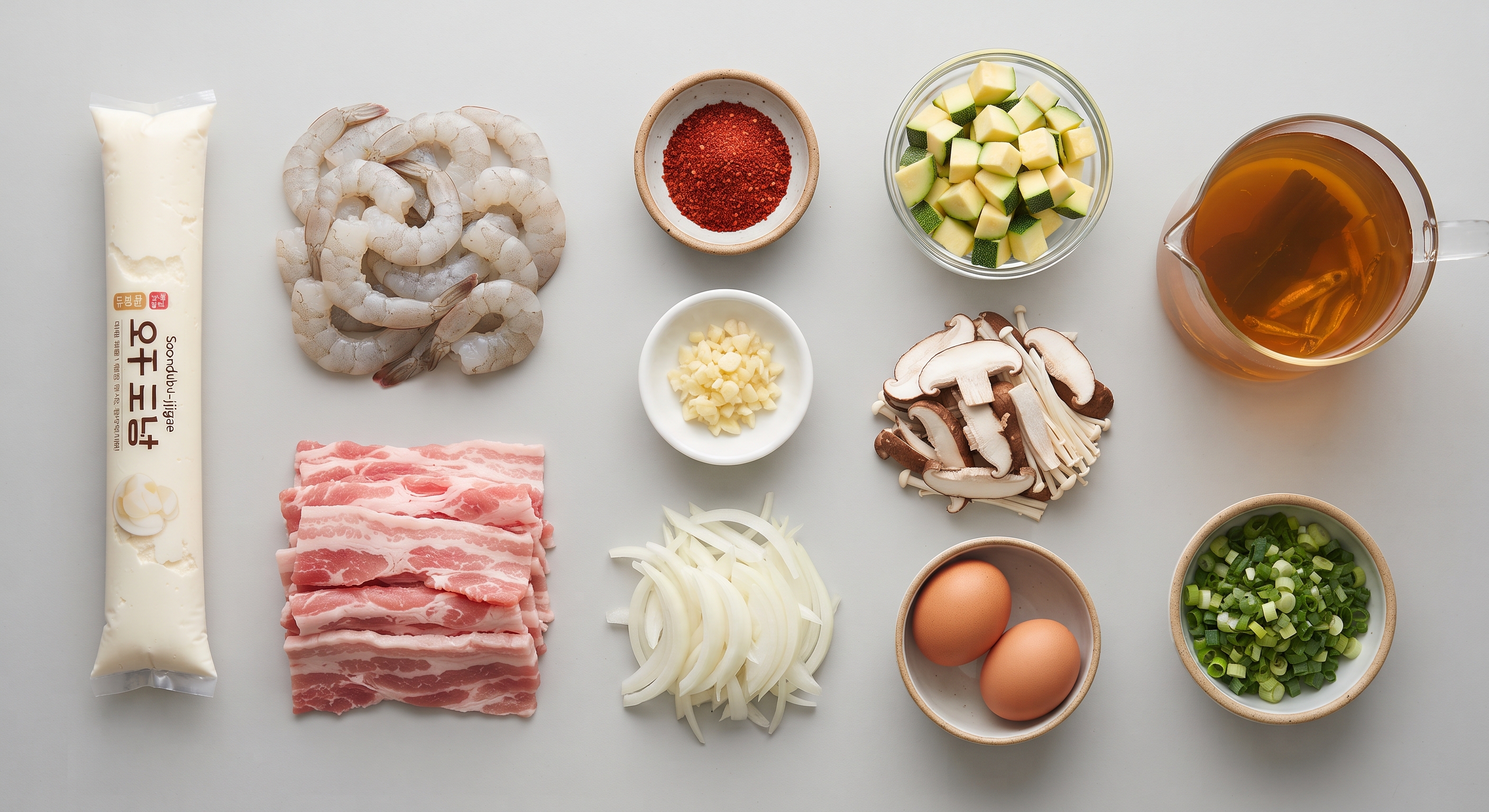
- 1 tube (12-14 oz / 340-400g) silken soft tofu (sundubu)
- 2 cups anchovy-kelp broth (or chicken/seafood stock)
- 1 tablespoon gochugaru (Korean red pepper flakes)
- 1 tablespoon gochujang (Korean red pepper paste)
- 1 tablespoon soy sauce
- 1 tablespoon sesame oil
- 3 cloves garlic, minced
- 1/2 small onion, thinly sliced
- 1/2 small zucchini, sliced into half-moons
- 3-4 shiitake or button mushrooms, sliced
- 2 eggs
- 2 green onions, chopped
- Toasted sesame seeds for garnish
- FOR SEAFOOD VERSION: 6-8 medium shrimp (peeled), 4-5 clams or mussels, optional small handful of squid
- FOR PORK VERSION: 3-4 oz (80-100g) thinly sliced pork belly or pork shoulder
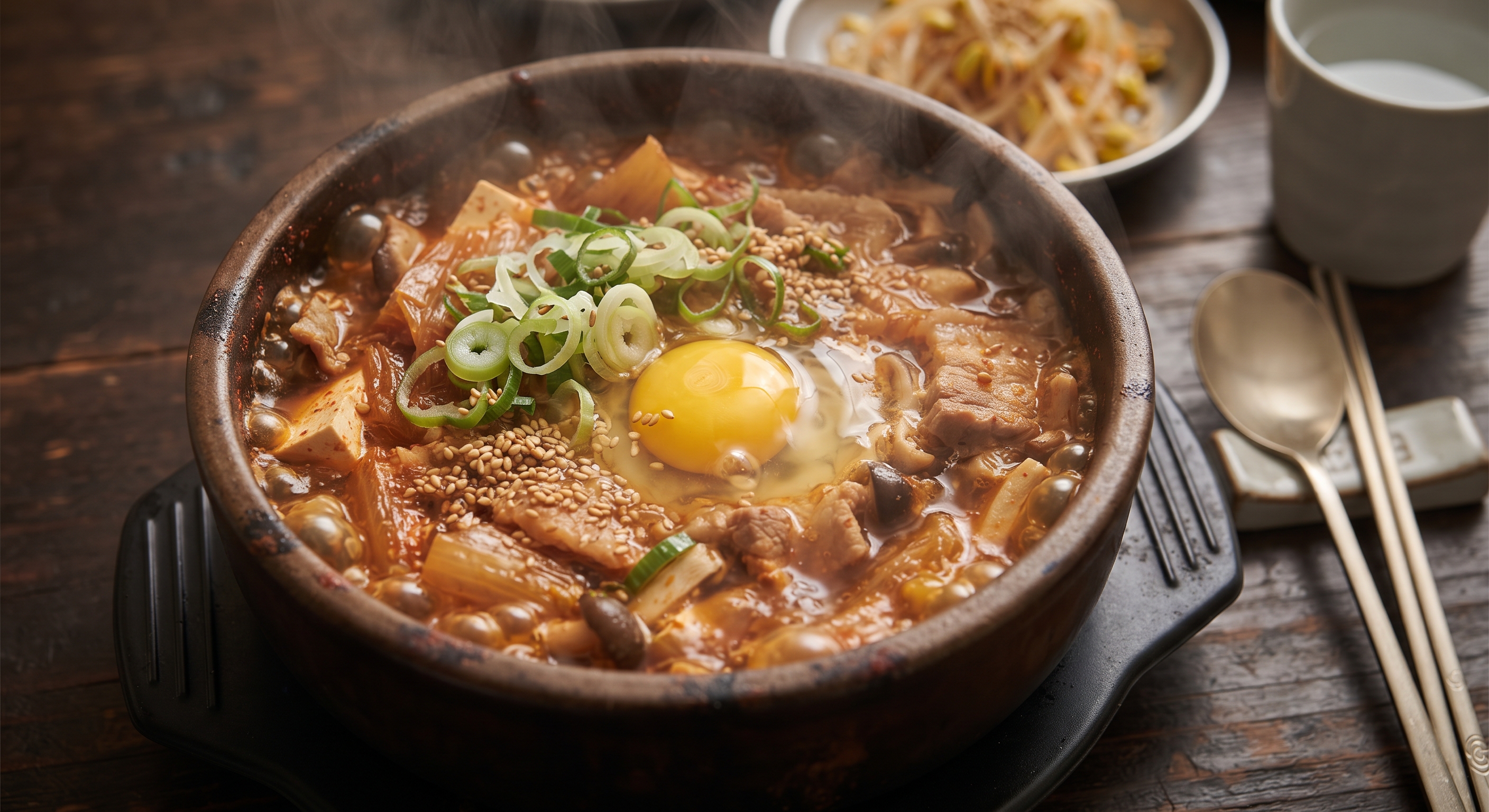
Sundubu jjigae is the ultimate Korean comfort stew — fiery red, silky soft, and bubbling hot in its stone pot. The magic is in the contrast: spicy, umami-rich broth cradling clouds of delicate tofu, finished with a barely-set egg that you stir in yourself. You’ll find it made two ways in Korea: with seafood (typically shrimp and clams) or with pork, and both are equally beloved.
Choose Your Protein: Seafood or Pork
This recipe works beautifully with either seafood or pork — the technique is nearly identical. Seafood (shrimp, clams, mussels, squid) gives you a sweet, briny depth that’s traditional in many restaurants. Pork belly or shoulder adds rich, fatty savoriness that clings to the tofu. Pick whichever you have access to or prefer. If you want to go vegetarian, you can skip the protein entirely and use vegetable broth, though you’ll lose some of that deep umami backbone.
Build the Flavor Base
Heat the sesame oil in a shallow pot or Korean stone pot (dolsot) over medium-high heat. If using pork, add it first and stir-fry for 2-3 minutes until the fat renders and edges start to brown. If using seafood, hold off for now.
Add the sliced onion and minced garlic to the pot and sauté for 1 minute until fragrant. The garlic should smell toasty but not burned. Now stir in the gochugaru and gochujang, coating the aromatics. Let this mixture sizzle for 30 seconds — this blooms the spice and takes away any raw paste taste. You’ll see the oil turn a deep, glossy red.
💡 Tip: Don’t skip the step of blooming the gochugaru in oil. It transforms the flavor from harsh to rich and round.
Add Broth and Vegetables
Pour in your broth and add the soy sauce. Bring everything to a strong boil over high heat, then add the zucchini and mushrooms. Let it boil vigorously for 3-4 minutes so the vegetables soften slightly and the broth concentrates.
If you’re making the seafood version, add your shrimp, clams, and squid now. The shellfish will open and the shrimp will turn pink in just 2-3 minutes of boiling. Don’t overcook them or they’ll turn rubbery.
Add the Soft Tofu
Gently scoop the soft tofu out of its package using a spoon and slide it into the bubbling stew in large, irregular chunks. Do not stir aggressively — you want pillowy clouds, not mush. Let the stew return to a boil and cook for another 2 minutes so the tofu heats through and absorbs some of the spicy broth.
Taste the broth now. It should be spicy, savory, and a little sweet from the vegetables. Adjust with more soy sauce if it’s bland, or a pinch of salt if needed.
The Egg: Timing Matters
This is the step that makes or breaks sundubu jjigae at home. Crack the eggs directly onto the surface of the stew when it’s still bubbling hard. Do this right before you bring the pot to the table — you want the egg whites barely set and the yolks still molten.
If you’re serving straight from the stove, crack the eggs, count to 30, then turn off the heat and bring the pot over. The residual heat will finish cooking the egg just enough. If your pot isn’t bubbling anymore, the egg won’t cook at all and will look raw and unappealing. Conversely, if you let it boil for 2-3 minutes, you’ll end up with hard-cooked eggs, which is fine but not the classic texture.
Serving and Substitutions
Scatter chopped green onions and sesame seeds over the top and serve immediately with steamed rice. The traditional way to eat this is to crack the egg yolk with your spoon, stir it gently into your portion of stew, and spoon it over rice bite by bite.
Broth shortcut: If you don’t have time to make anchovy-kelp broth (dashida), use any light stock — chicken, seafood, or even water with a spoonful of dashida powder or fish sauce. The stew is so flavorful you’ll still get great results.
Tofu note: Look for “sundubu” or “soft/silken tofu” in tubes at Korean or Asian grocers. The Japanese silken tofu in shelf-stable boxes (like Mori-Nu) works in a pinch, though it’s a bit firmer and less custardy. Avoid anything labeled “firm” or “extra-firm” — it won’t have that signature melt-in-your-mouth texture.
Spice level: This recipe is moderately spicy. Cut the gochugaru in half for mild, or add an extra teaspoon plus some fresh sliced chili for serious heat.