Tteokbokki (Spicy Rice Cakes) – Bunsikjip Street-Style
- Prep
10 minutes - Cook
15 minutes - Serves
2-3 servings - Difficulty
easy
Ingredients
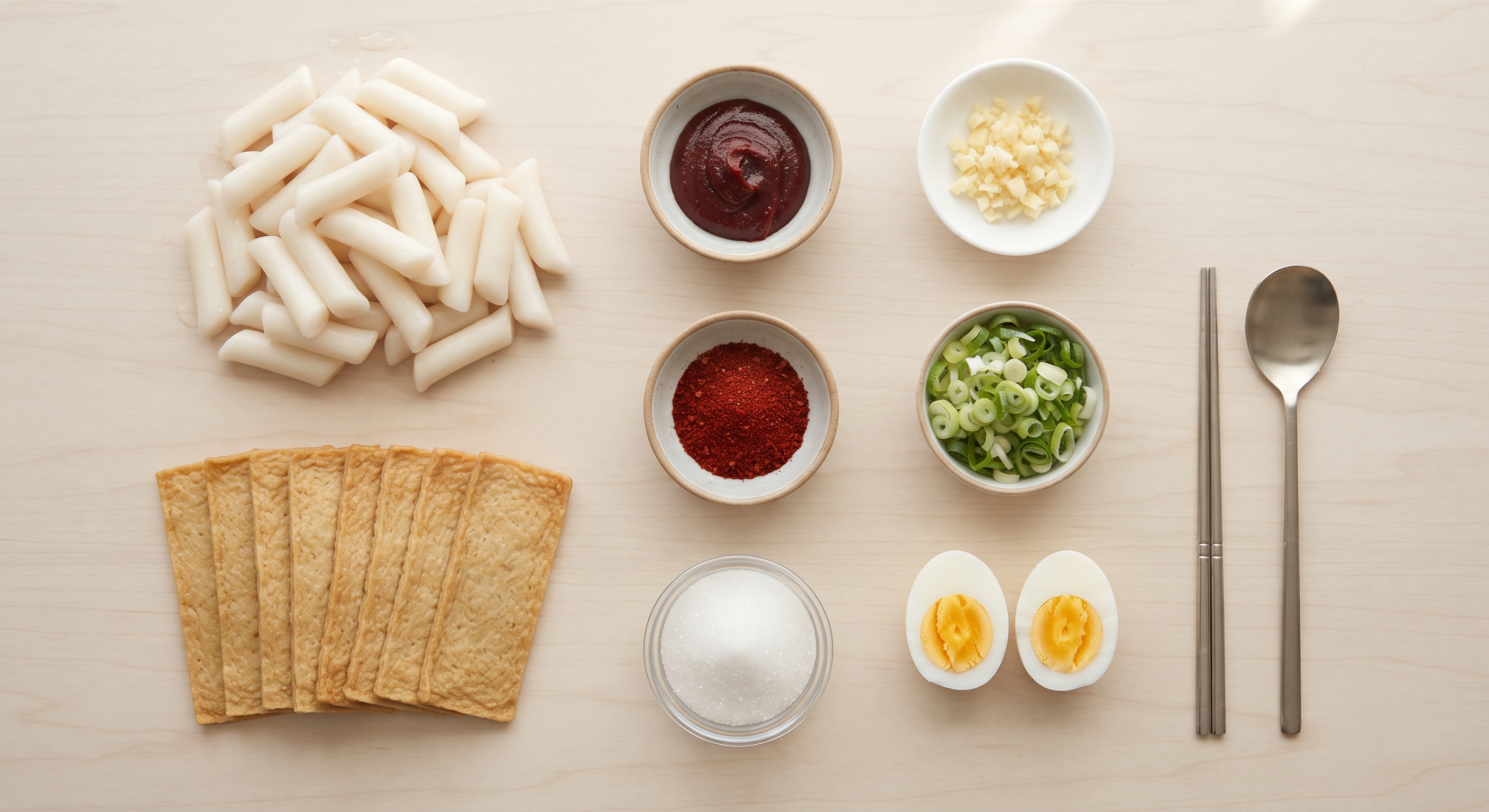
- 1 lb (450g) garaetteok (Korean cylinder rice cakes), fresh or frozen
- 4 cups water or anchovy-kelp stock
- 3 tbsp gochujang (Korean red pepper paste)
- 1 tbsp gochugaru (Korean red pepper flakes)
- 2 tbsp sugar
- 1 tbsp soy sauce
- 3 cloves garlic, minced
- 6 oz (170g) eomuk (Korean fish cakes), cut into bite-sized pieces
- 2-3 hard-boiled eggs, peeled
- 2 scallions, cut into 2-inch pieces
- 1 tsp sesame oil
- Sesame seeds for garnish (optional)
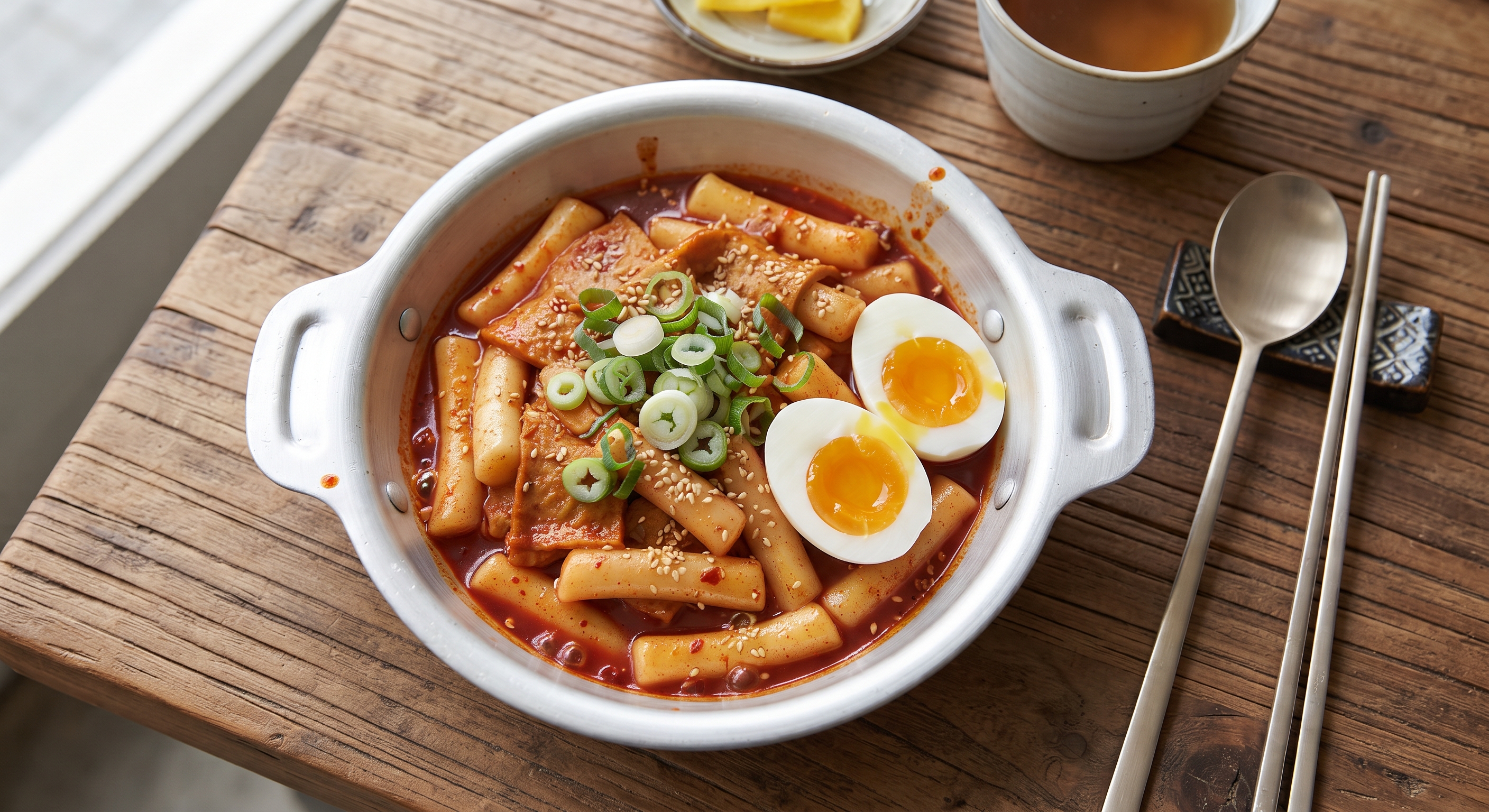
This is the tteokbokki you find at every bunsikjip (snack shop) in Korea — glossy, fiery red, and dangerously addictive. The chewy rice cakes swim in a thick, sweet-spicy sauce that clings to every surface, and the fish cakes and soft-boiled eggs soak up all that flavor. It’s comfort food that stains your fingers red and makes you reach for more even when your mouth is on fire.
Prepare the Rice Cakes
If you’re using frozen or refrigerated garaetteok, soak them in cold water for 10-15 minutes to soften them up. Fresh rice cakes can go straight into the pot, but if they’ve been sitting in the fridge for a few days and feel stiff, a quick soak helps them cook evenly. You want them pliable, not rock-hard — they should bend slightly without snapping.
Drain the rice cakes once they’ve softened. If you’re using the sliced, coin-shaped rice cakes instead of the cylinder kind, that works too, though the cylinder style (garaetteok) is traditional for bunsikjip tteokbokki and gives you those satisfying long, chewy bites.
Make the Sauce Base
In a large, shallow pan or skillet, combine the water (or stock — anchovy-kelp stock adds umami depth, but plain water works perfectly fine), gochujang, gochugaru, sugar, soy sauce, and minced garlic. Whisk everything together over medium-high heat until the gochujang dissolves completely and the sauce is smooth. Don’t skip the sugar — it balances the heat and creates that signature sweet-spicy flavor profile. The sauce will look thin at first, but it’ll thicken as the rice cakes release their starch.
💡 Tip: If you can’t find gochugaru, you can use just gochujang, but the dish will be less vibrant and miss some of that smoky, fruity heat. It’s worth ordering online if you plan to cook Korean food regularly.
Cook the Rice Cakes and Add Fish Cakes
Once the sauce comes to a rolling boil, add the drained rice cakes and stir gently to coat them. Let everything cook for 8-10 minutes, stirring occasionally to prevent sticking. The rice cakes will become tender and translucent at the edges, and the sauce will reduce and thicken into a glossy, clingy coating. You’re looking for a consistency that coats the back of a spoon but isn’t gloopy.
Add the fish cake pieces about halfway through — around the 4-5 minute mark. Fish cakes are already cooked, so they just need time to heat through and absorb the sauce. Korean eomuk is usually sold in flat sheets or thick rectangles; cut them into triangles or strips. If you can’t find Korean fish cakes, Japanese kamaboko works in a pinch, though the texture is a bit firmer.
Add Eggs and Finish
Nestle the peeled hard-boiled eggs into the sauce and let them simmer for 2-3 minutes to warm through and take on some color from the gochujang. Some bunsikjip serve them whole, others halve them — your call. Add the scallion pieces in the last minute of cooking; they should soften slightly but still have a bit of bite.
Turn off the heat and drizzle the sesame oil over everything, giving it one final gentle stir. The sesame oil adds a nutty aroma that rounds out the spice. Taste the sauce — if it’s too spicy, add a pinch more sugar; if it’s too sweet, a splash of soy sauce balances it out.
Serving and Variations
Serve the tteokbokki hot, straight from the pan if you want that communal bunsikjip vibe, or portion it into shallow bowls. Sprinkle sesame seeds on top and have napkins ready — this gets messy. It’s best eaten immediately while the rice cakes are still chewy; they get gummy as they cool and the sauce thickens further.
Common add-ins: Cabbage (adds crunch and sweetness), ramen noodles (thrown in during the last 3 minutes), or mozzarella cheese (a modern twist — just tear it over the top at the end and let it melt). For a less spicy version, reduce the gochugaru and bump up the sugar slightly. And if you want a richer sauce, swap half the water for chicken or beef stock.